
Wild indigo
Baptisia tinctoria (L.) R. Br.
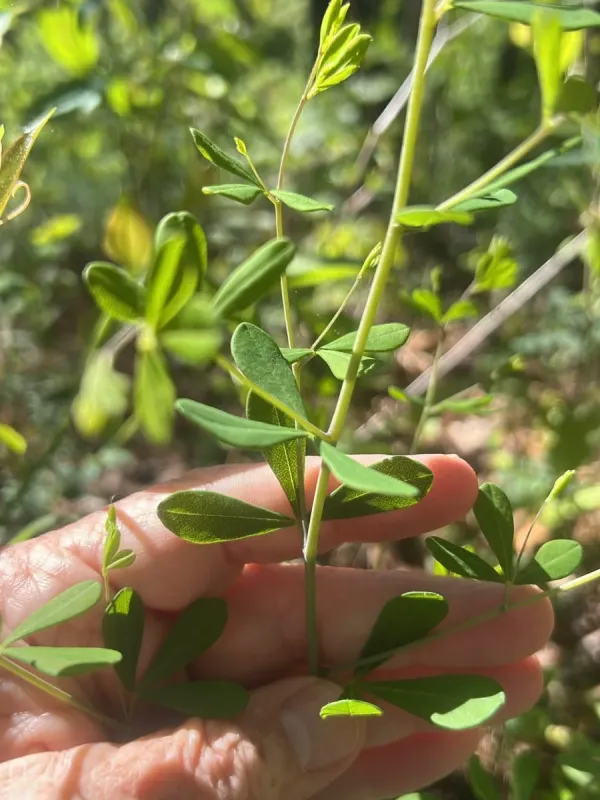
Description
Sowing dates
Wild indigo (Baptisia tinctoria) is a perennial legume species belonging to the Fabaceae family. It is typically propagated via seeds, which require specific preparation before planting.
Seed germination is often inhibited by a hard seed coat; therefore, mechanical scarification or soaking in warm water prior to sowing is highly recommended to improve success rates.
Planting in the field should occur in spring once the soil has warmed up, ensuring the site receives full sun for optimal development of the root system.
When starting indoors, using deep pots is essential because Baptisia develops a significant taproot early on, which does not tolerate disturbance during transplantation.
Proper spacing of at least 50 centimeters between individual plants is necessary to prevent crowding and to ensure adequate air circulation as the plant matures.
Growing requirements
Native to eastern North America, wild indigo is well-adapted to dry, sandy soils, open woodlands, and prairie-like environments, making it a robust crop for varied landscapes.
The plant thrives in well-drained soil and is exceptionally drought-tolerant once established, thanks to its deep and expansive root architecture.
Full sun exposure is a non-negotiable requirement for healthy growth. Plants grown in shaded conditions tend to become leggy and produce significantly fewer flowers.
It prefers neutral to slightly acidic soil conditions and does not require intensive fertilization, as it is capable of nitrogen fixation through symbiotic bacteria in its roots.
Due to its high cold hardiness, the plant can overwinter successfully in most temperate climate zones without the need for protective mulch or covering.
Main diseases and pests
Wild indigo is remarkably resistant to many common agricultural pests and diseases, which enhances its potential as a low-maintenance, sustainable crop choice.
However, in poorly drained soils, the plants are susceptible to various crown and root rots caused by soil-borne fungal pathogens, especially during wet seasons.
Occasionally, aphids may congregate on tender new growth, and certain lepidopteran larvae might feed on the foliage, though rarely in densities that require intervention.
Maintaining good site hygiene and ensuring the soil remains light and airy around the base of the plant are the best defenses against these minor threats.
In cases of severe infestation or disease outbreak, targeted and environmentally friendly control measures are sufficient to protect the health of the perennial stand.
Harvesting
Historically, the plant was cultivated as a source of dye. The foliage is harvested during the flowering period when the concentration of chemical precursors is at its peak.
The processing of wild indigo for dye involves extracting the pigments from the leaves and stems through a controlled fermentation and oxidation process.
For seed production, harvesting takes place in late summer as the pods turn dark brown, necessitating careful timing to prevent the natural dehiscence and seed dispersal.
Harvested seeds should be cleaned and stored in cool, dry conditions to maintain viability for future sowing cycles within the agricultural operation.
As a landscape or ornamental element, maintenance involves deadheading spent flower spikes to encourage plant vigor and prevent self-seeding if it is not desired.