
Blue wild indigo
Baptisia australis (L.) R. Br.
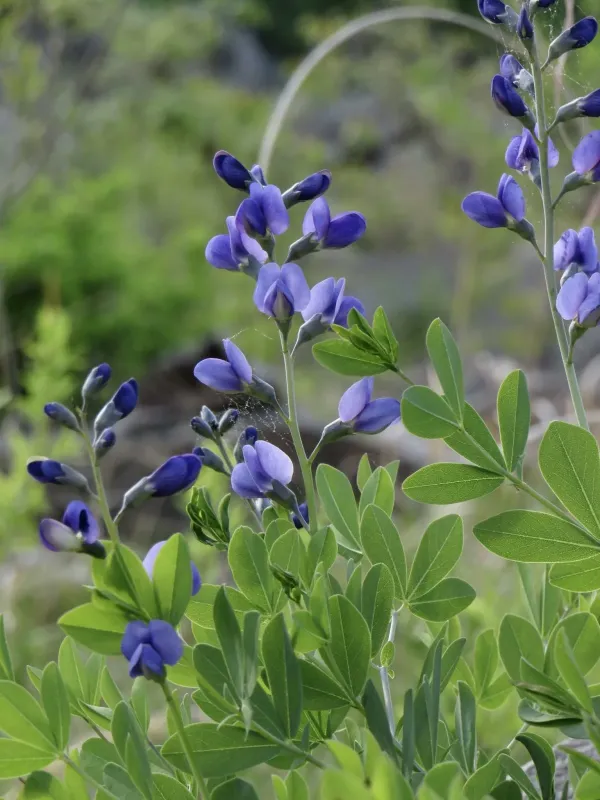
Description
Sowing dates
Blue wild indigo (Baptisia australis) is a long-lived perennial belonging to the Fabaceae family. Propagation is primarily achieved through seeds or careful division of the root system in early spring.
Seeds have a hard coat, requiring scarification to break dormancy and ensure uniform germination. Planting in the field is best performed in late autumn or early spring when soil temperatures begin to rise.
When starting indoors, seedlings should be placed in deep containers to accommodate the developing taproot. Minimal root disturbance during transplanting is crucial for the establishment of young plants.
Direct seeding in prepared rows should follow a spacing of at least 60-90 cm between plants. This allowance for future growth prevents overcrowding as the plants reach full maturity over several seasons.
Once established, the plant rarely requires supplemental seeding or replanting. It is known for being a permanent addition to the landscape, often thriving in the same location for decades.
Growing requirements
This species is native to the central and eastern United States, adapted to diverse prairie and woodland margin environments. It thrives in full sun but can tolerate light, intermittent shade.
Soil requirements are relatively flexible, though the species excels in deep, well-draining soils. It is highly drought-tolerant once the deep taproot system is fully developed.
Neutral to slightly acidic soil pH is preferred for optimal nutrient uptake. Avoid planting in waterlogged clay soils, as stagnant moisture can quickly lead to root decay in the winter months.
The plant is highly frost-hardy and requires minimal winter protection in temperate climate zones. It undergoes a natural dormancy period, with top growth dying back after the first hard frosts.
Agricultural management should focus on weed control during the establishment phase. Once the plant forms a large, dense clump, it effectively suppresses competitive weeds on its own.
Main diseases and pests
Baptisia australis is exceptionally resistant to major diseases, making it a low-maintenance crop for various agricultural settings. It is rarely bothered by commercial crop pests.
Root rot is the most significant threat, typically caused by improper site selection in areas with poor drainage. Ensuring sufficient soil aeration is the best preventive measure.
Occasional infestations of aphids can occur on the soft growth of flower stems. These are usually non-lethal and can be managed with basic biological control agents or insecticidal soaps.
Fungal issues like powdery mildew may appear in areas with high humidity and poor airflow. Increasing the spacing between individual plants is a highly effective way to prevent this.
Unlike many other legumes, this plant is not a primary target for common agricultural pests such as spider mites or beetles, due to its complex alkaloid profile.
Harvesting
While primarily cultivated as an ornamental, the plant produces attractive seed pods. Harvesting for seed collection should occur once pods have turned black and become dry and brittle.
In ornamental practice, the flowering spikes can be harvested for fresh cut flowers, although they should be cut before the entire spike has opened for better vase life.
For those interested in natural dye production, the foliage contains pigments historically used to create blue dyes. Harvesting of leaf material should be done in mid-summer for peak pigment concentration.
Care should be taken to leave enough foliage after any harvest to ensure the plant can store sufficient energy for the following year's growth.
Maintenance pruning at the end of the season involves cutting the plant back to ground level, which tidies the area and prepares the root stock for its winter rest.