
Torch lily
Kniphofia uvaria (L.) Oken
Description
Sowing dates
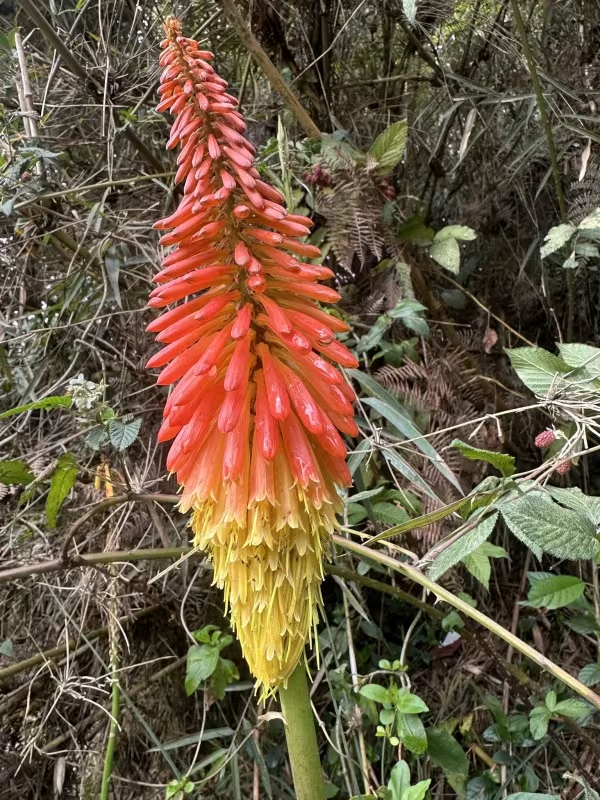
The torch lily (Kniphofia uvaria) is a striking perennial belonging to the Asphodelaceae family, originating from the diverse habitats of South Africa.
In temperate zones, propagation is usually started from seeds sown in trays during late winter, specifically February or March, in a controlled indoor environment.
The seeds require light to germinate effectively, so they should be surface-sown on a moist, well-draining substrate without heavy covering.
Maintained at temperatures between 20–22 degrees Celsius, germination generally occurs within 3 to 4 weeks, depending on seed viability and moisture levels.
Once the risk of frost has passed in late spring, seedlings can be hardened off and transplanted to their permanent locations in the garden.
Growing requirements
This crop thrives in full sun exposure and requires a location sheltered from strong, drying winds to protect its tall, spike-like inflorescences.
Soil quality is critical: the plant demands well-draining, fertile soil. Heavy clays must be amended with grit or sand to prevent stagnant water at the roots.
While the plant is drought-tolerant once established, it responds best to regular watering during the active growing and flowering season.
Winter protection is essential in colder climates; the crown of the plant should be mulched heavily with dry leaves or pine needles to prevent frost damage.
Regular feeding with a balanced liquid fertilizer during the spring months supports vigorous leaf development and subsequent flower production.
Main diseases and pests
The most significant threat to torch lily health is poor drainage, which inevitably leads to crown and root rot during wetter periods of the year.
Common insect pests affecting the plant include aphids, spider mites, and thrips, which cluster on developing flower spikes and foliage.
Integrated pest management strategies, such as using systemic insecticides or horticultural soaps, are recommended when pest populations reach thresholds.
To mitigate disease outbreaks, it is crucial to ensure good spacing between plants to maximize airflow and reduce relative humidity around the foliage.
If fungal infections like powdery mildew appear, affected plant parts should be removed promptly and treated with appropriate broad-spectrum fungicides.