
Phlomoides hybrida
Phlomoides hybrida
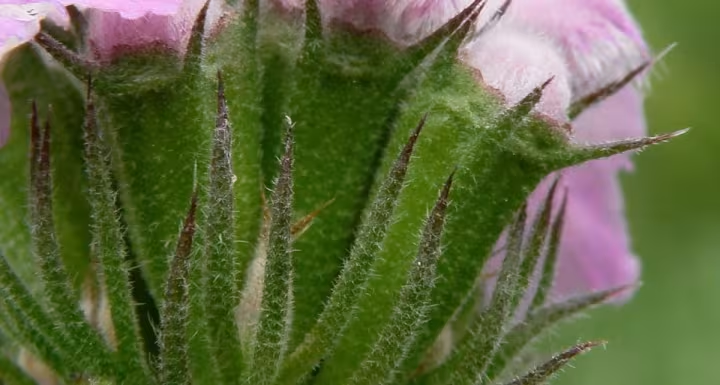
Description
Sowing dates
Phlomoides hybrida is a herbaceous perennial belonging to the Lamiaceae family. It is gaining interest in agriculture for its robustness and potential utility as both a forage source and a medicinal plant species.
Sowing should take place in early spring when the soil temperature consistently reaches 10 degrees Celsius. Autumn sowing is also an option, allowing for natural cold stratification of the seeds during winter.
Seeds are sown at a shallow depth of 1.5 to 2 centimeters. Maintaining wide row spacing of approximately 50 to 60 centimeters is crucial to ensure each individual plant has sufficient space for its rosette development.
Seedlings typically emerge within three weeks under favorable moisture conditions. During the first year, the plant focuses its energy on developing a strong root system and a basal leaf rosette.
Exposure to full sunlight is essential during all growth stages. Shaded conditions lead to weak, spindly plants with significantly reduced flowering potential, which negatively impacts the final yield.
Growing requirements
The plant thrives in well-drained, fertile soils with a neutral or slightly alkaline pH. It is sensitive to waterlogging, so selecting fields with excellent drainage is paramount for successful cultivation.
Phlomoides hybrida is highly drought-tolerant, owing to its deep taproot system. This makes it a sustainable choice for arid or semi-arid regions where water resources for irrigation are limited.
Soil nutrient management should focus on balanced NPK fertilizers applied at the start of the growth season. Over-fertilization with nitrogen should be avoided to prevent excessive leafy growth at the expense of root vigor.
Regular cultivation of the spaces between rows helps in soil aeration and moisture retention. Weed control is particularly critical during the early stages of growth until the plants cover the soil surface.
The plant demonstrates good resistance to extreme temperature fluctuations. However, in regions with very cold winters and no snow cover, light mulching can provide additional protection for the crown of the plant.
Main diseases and pests
The main threats to Phlomoides hybrida are linked to improper soil management. Root rot is a common issue when plants are grown in heavy or poorly drained soil types, leading to rapid decay.
Powdery mildew may occur in late summer, especially if the air humidity is high and there is poor airflow within the crop canopy. Applying systemic fungicides or biocontrol agents helps mitigate this risk.
Pests such as aphids and leaf-eating beetles can cause damage to foliage and flower spikes. Regular scouting is recommended to identify infestations early before they become a systemic problem for the field.
Crop rotation is an effective strategy to prevent the buildup of soil-borne pathogens. A gap of at least 4 to 5 years before replanting on the same site is recommended to keep soil health optimal.
Integrated pest management (IPM) practices, including the use of healthy, disease-free seed stock, form the basis of a successful agricultural program for this species.
Harvesting
The harvest of Phlomoides hybrida for medicinal or industrial purposes is performed during the peak flowering stage. This timing ensures the highest concentration of active biochemical compounds in the aerial parts.
Aerial parts are harvested by mechanical mowing, leaving about 10–15 centimeters of the stem above the ground. Immediate processing is necessary to prevent spoilage and quality loss due to heat accumulation.
Drying must be conducted in well-ventilated, shaded areas. Controlled temperatures are important to maintain the integrity of the secondary metabolites found within the plant tissue.
For seed production, harvesting occurs once the capsules are fully mature and show signs of browning. The seeds are then threshed, cleaned, and stored in a cool, dry place to maintain viability.
Roots, when harvested for pharmacological use, are cleaned of soil particles, cut into smaller segments, and dried in specialized drying chambers to ensure uniformity and prevent fungal growth during storage.