
Phlomoides bracteosa
Phlomoides bracteosa
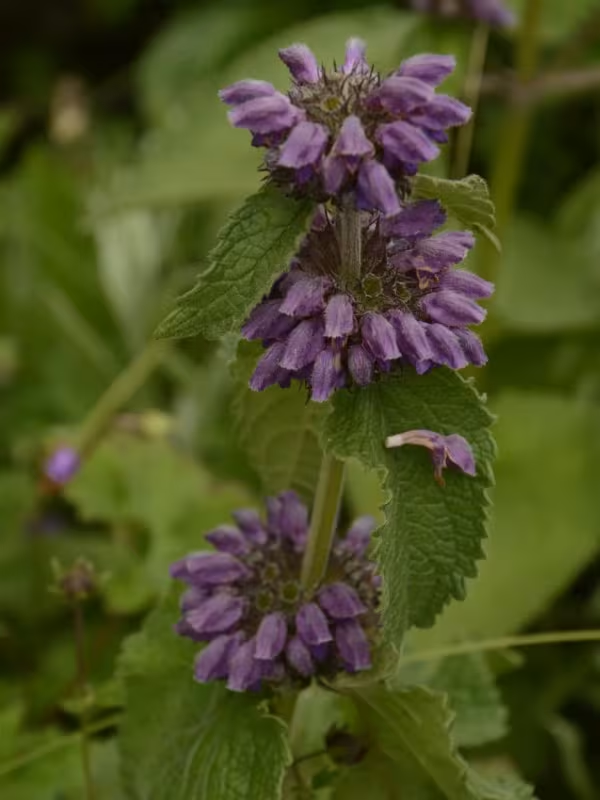
Description
Sowing dates
For successful propagation of Phlomoides bracteosa, sowing should ideally be performed in late autumn to allow for natural cold stratification of seeds.
When sowing in spring, seeds require pre-treatment or cold exposure to break dormancy and ensure uniform germination across the field.
Seeds should be distributed evenly at a shallow depth of approximately 0.5 to 1 cm to avoid smothering the emerging sprouts.
Spacing between rows should be maintained at 50–70 cm, which facilitates better weed management and allows for necessary aeration of the crop canopy.
The seeding rate is determined by the target plant density, usually aiming for 4–6 plants per square meter for optimal industrial output.
Growing requirements
Phlomoides bracteosa is a robust perennial belonging to the Lamiaceae family, known for its deep root system and long-term viability in diverse soils.
The plant thrives in well-drained, calcareous, or slightly alkaline soils that provide necessary structural support and avoid waterlogging.
It displays remarkable tolerance to drought, making it an excellent candidate for regions with limited rainfall or underdeveloped irrigation systems.
Full sun exposure is critical for the plant to reach its full physiological potential, directly influencing the intensity of flower production.
Minimal nutrient supplementation is required, though phosphorus and potassium applications at the start of the season can enhance root development and winter hardiness.
Main diseases and pests
Root rot represents the primary agricultural threat to this species, particularly in fields where soil drainage is inadequate or water remains stagnant.
Fungal infections, such as powdery mildew, may manifest during high humidity periods, necessitating prompt intervention with organic or synthetic fungicides.
Insects like aphids and spider mites can cause significant damage to foliage, especially during exceptionally dry and warm growing seasons.
Effective crop protection relies on integrated pest management practices, including the removal of debris to limit overwintering sites for pathogens.
Rotation with non-host crops is essential every 5–6 years to maintain soil health and prevent the accumulation of soil-borne diseases.
Harvesting
Harvesting of Phlomoides bracteosa for raw botanical materials is best executed when the plants reach peak anthesis, typically mid-summer.
Mechanical harvesting via specialized mowers allows for efficient collection of the stems, ensuring a consistent cut height above the soil line.
The collected biomass should be transported promptly to drying facilities to prevent spontaneous heating and the subsequent loss of chemical efficacy.
Controlled air drying at temperatures not exceeding 40°C is the standard practice to preserve the integrity of the plant's essential components.
Post-harvest storage must occur in a climate-controlled environment to prevent moisture absorption and long-term degradation of the plant material.