
Tuberous sage
Phlomis tuberosa L.
Description
Sowing dates
Tuberous sage (Phlomis tuberosa L.) can be propagated by both seeds and division of the rootstock. Since the seeds require a period of stratification, the most successful sowing period is during late autumn.
Winter sowing allows seeds to undergo natural stratification in the soil, which significantly increases germination rates when the weather warms up in the spring.
Vegetative propagation is typically achieved by dividing the rootstock in early spring or late summer. It is essential to ensure that each division contains some of the characteristic tuberous thickenings.
Sowing depth should be shallow, approximately 2–3 centimeters, as small seeds lack the energy reserves to emerge from a greater depth in the soil.
When establishing a plot, plant spacing should be at least 50–60 centimeters. This provides enough room for the plant to mature and ensures adequate airflow between individual specimens.
Growing requirements
This perennial herb belongs to the Lamiaceae family. It is characterized by a deep, well-developed root system with tuberous storage organs that allow the plant to survive harsh conditions.
The plant thrives in loose, well-drained soils with a neutral or slightly alkaline pH. It is highly intolerant of waterlogged areas, which can lead to rapid decay of the tubers.
Tuberous sage is highly drought-tolerant and requires plenty of direct sunlight. In shade, the plant becomes spindly and its flowering performance is significantly reduced.
During the first year, young plants require manual weeding to prevent them from being overwhelmed by more aggressive grasses or weeds.
Once established, the plant requires very little maintenance, including minimal watering, as its deep root system can access moisture from the deeper soil layers.
Yield
The primary agricultural value of Tuberous sage lies in its high nectar productivity, making it an excellent candidate for apiaries looking to support bee populations during mid-summer.
The root tubers are known to contain starch, sugars, and tannins, which have been historically utilized in traditional medicine for their anti-inflammatory and astringent properties.
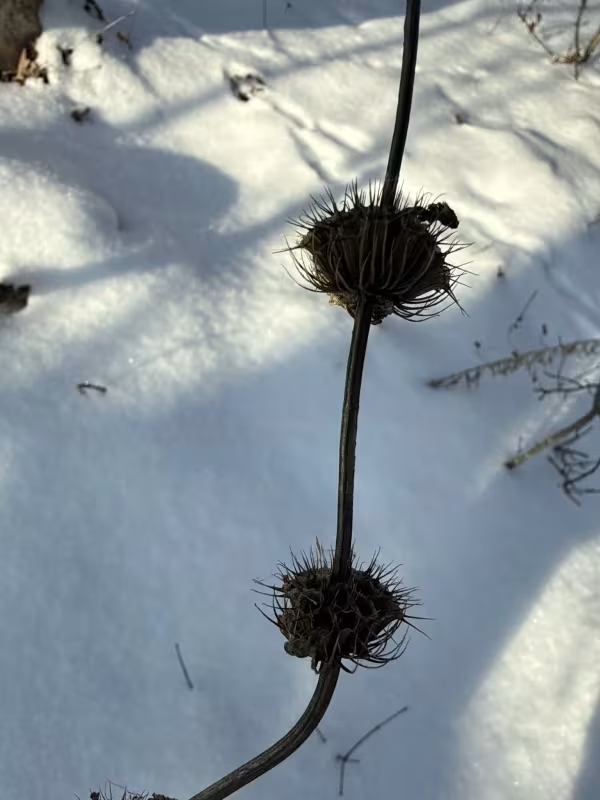
In landscape design, it serves as a robust ornamental plant, valued for its long-lasting, architecturally interesting inflorescences and low-maintenance requirements.
The plant can also be used in ecological restoration projects, especially in arid or semi-arid regions where soil stabilization is necessary to prevent erosion.
- Excellent nectar source for honeybees.
- High content of bioactive compounds in the root system.
Main diseases and pests
Tuberous sage is generally resistant to most common plant diseases. However, excessive moisture can increase susceptibility to powdery mildew and various root rot fungi.
Insects rarely cause severe damage to healthy stands, though occasionally, leaf-eating caterpillars may appear during the peak growth season.
The greatest risk to the crop is poor soil drainage, which disrupts the natural respiration of the roots and promotes the colonization of harmful soil-borne pathogens.
Management strategies emphasize prevention through proper site selection and avoiding excessive overhead irrigation in humid conditions.
If disease occurs, cultural control methods, such as removing and destroying affected plant material, are preferred over the heavy application of synthetic fungicides.
Harvesting
The aerial parts of the plant are harvested during the full flowering stage. This is when the concentration of essential oils and other medicinal compounds is highest.
Harvesting should be done using sharp blades on dry days to ensure the harvested material dries quickly and does not develop mold during processing.
Drying should take place in a well-ventilated, shaded environment. Direct sunlight can cause the degradation of volatile components, reducing the quality of the raw material.
For the tubers, harvest is conducted after the vegetative season. The tubers should be cleaned, sliced, and dried in a dehydrator or a ventilated oven at moderate heat.
Stored in cool, dark, and dry conditions, the processed herbal material can maintain its potency and quality for several years after harvest.