
Paradox canary grass
Phalaris paradoxa L.
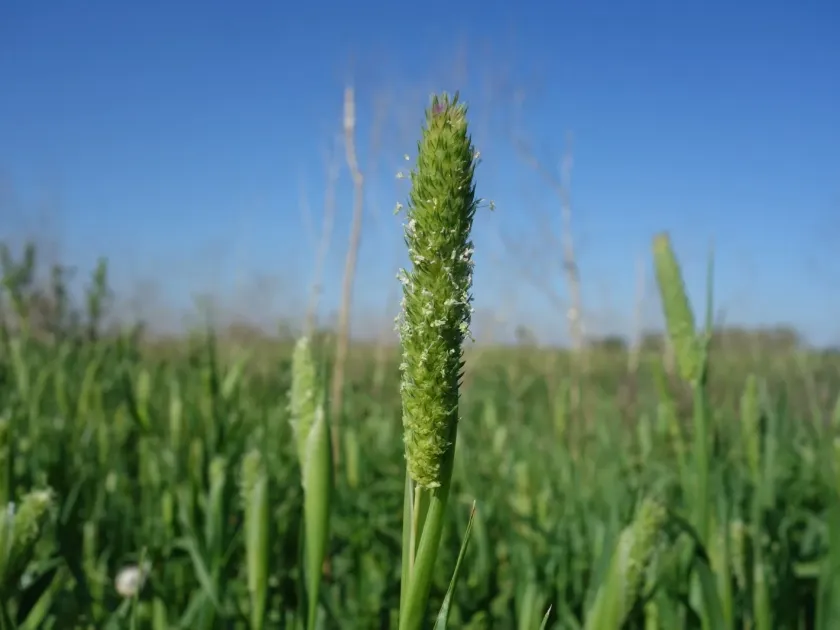
Description
Sowing dates
Paradox canary grass is primarily an annual weed that behaves as either a winter or early spring plant, depending on the climatic zone.
The germination period usually coincides with the planting season of winter cereals, posing a significant challenge to farmers early in the year.
Seeds of Phalaris paradoxa have a significant longevity in the soil, allowing the plant to re-emerge in subsequent seasons if not controlled.
Early-season emergence allows this weed to establish itself quickly, often gaining a competitive advantage over wheat and barley crops.
Management should focus on the seedling stage to prevent the plant from reaching reproductive maturity and shedding new seeds.
Growing requirements
Belonging to the Poaceae family, this plant thrives in moist, fertile environments and is commonly found in fields with poor drainage.
It exhibits high ecological plasticity, meaning it can tolerate diverse soil types, including heavy clays and moderately saline conditions.
The species originated in the Mediterranean region but has successfully spread to various other parts of the world with compatible climates.
It requires adequate moisture and sunlight to reach its maximum height and produce a dense spike that mimics some domesticated grasses.
Nutrient requirements are high, making this grass a strong competitor for soil nitrogen and phosphorus in crop fields.
Main diseases and pests
This grass is a formidable agricultural weed that competes aggressively for space, nutrients, and sunlight, directly reducing potential crop yields.
- Direct competition with cereal crops
- Contamination of harvesting machinery
- Depletion of soil moisture levels
- Potential host for various grain pathogens
Various fungal diseases that affect cereal crops are known to manifest on paradox canary grass, facilitating their spread throughout the field.
Pests, particularly those that feed on the foliage and sap of grasses, find a stable habitat in dense patches of this weed species.
Integrated weed management, including herbicides and crop rotation, is essential to minimize the economic damage caused by this resilient plant.