
Petrocoptis glaucifolia
Petrocoptis glaucifolia
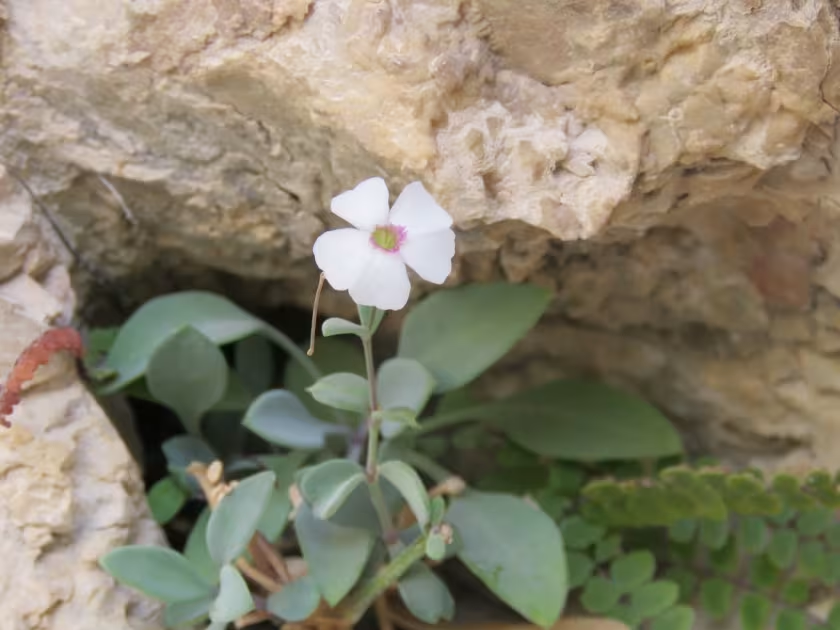
Description
Sowing dates
Seed propagation of Petrocoptis glaucifolia is primarily carried out in the spring period, from March to April, using protected ground or seedling trays.
For successful germination, seeds require stratification in cool conditions, which helps to increase germination energy and ensures uniform seedling emergence.
When sowing directly into open ground, the schedule shifts to late May, once the risk of night frosts, which are detrimental to young sprouts, has passed.
Seeds should be covered minimally with substrate, as a certain level of surface light is necessary to activate their biological germination processes.
The optimal temperature for the development of young plants is 16–20 degrees Celsius with moderate moisture, avoiding stagnation in the root zone.
Growing requirements
Petrocoptis glaucifolia belongs to the Caryophyllaceae family and is a low-growing perennial plant, naturally native to the rocky areas of the Pyrenees mountains.
The crop prefers well-drained, calcareous, or rocky substrates, which is determined by its natural origin in high-altitude environments.
The plant is light-loving, therefore, for full development and the formation of the characteristic glaucous shade of its foliage, it requires a fully sun-exposed location.
In lowland areas, it is critical to ensure excellent water drainage, as excessive soil moisture often leads to root rot and other fungal issues.
The cultivation practice involves minimal maintenance, consisting of occasional weeding and monitoring soil moisture levels to mimic the species' natural habitat.
Main diseases and pests
The main threat to Petrocoptis glaucifolia is excessive moisture accumulation in the root zone, which triggers the development of various fungal diseases.
Root rot is the most common problem occurring when the crop is grown in heavy clay soils prone to waterlogging after rainfall.
Pests such as slugs and snails can cause mechanical damage to delicate leaves during prolonged rainy periods or over-watering of the planting site.
To prevent the spread of pathogens, it is recommended to use fine gravel mulching, which prevents foliage from coming into direct contact with wet soil.
In dry climates, the plant is extremely resilient; however, improper care may lead to spider mite infestations, requiring the application of acaricides.