
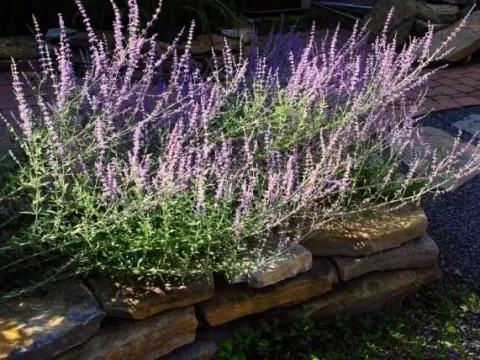
Perovskia
Perovskia Karel.
Propagation of Perovskia is primarily achieved through cuttings taken in late spring or early summer, as this method ensures the preservation of varietal characteristics.
What the section contains

Perovskia
Seed sowing is also an option, but it requires a period of cold stratification to break dormancy and ensure consistent germination rates in the nursery.
Seeds should be sown in a well-draining, sandy-based medium, kept in a cool environment until they begin to sprout, usually within two to four weeks.
When using cuttings, select non-flowering shoots to improve rooting efficiency and treat them with a hormone rooting compound before placing them in the substrate.
Transplanting into the permanent location should be done carefully to avoid root disturbance, ideally during periods of mild, overcast weather to prevent shock.
Perovskia is a perennial subshrub belonging to the Lamiaceae family, native to the arid environments of Central Asia, which dictates its preference for specific growing conditions.
The plant thrives in full sun and requires exceptionally well-drained, alkaline or neutral soil that is relatively low in fertility, mimicking its natural rocky habitat.
Agricultural management focuses on minimal irrigation, as excessive water is the primary cause of decline and mortality in healthy, established specimens.
Pruning is an essential maintenance task; it should be performed in early spring by cutting the old stems back to within a few centimeters of the ground to promote fresh growth.
The climate requirements include a preference for warm, dry summers and the ability to withstand winter dormancy, provided that the soil does not remain waterlogged during freeze-thaw cycles.
Root rot caused by Phytophthora or other water-borne pathogens is the most common health issue for Perovskia, resulting from poor soil drainage or excessive rainfall.
Pest infestation is rare due to the high concentration of essential oils in the foliage, which provides a natural deterrent against many common garden pests.
Prevention involves ensuring adequate spacing between plants to maintain high air circulation, which prevents the build-up of humidity around the stems and leaves.
In cases where environmental conditions favor fungal development, prompt removal of symptomatic plant parts is necessary to stop the spread of infection.
Monitoring the moisture levels of the soil is the most effective way to manage potential threats, as maintaining a dry root zone significantly reduces the risk of pathogens.