
Russian sage
Perovskia atriplicifolia Benth.
Description
Growing requirements
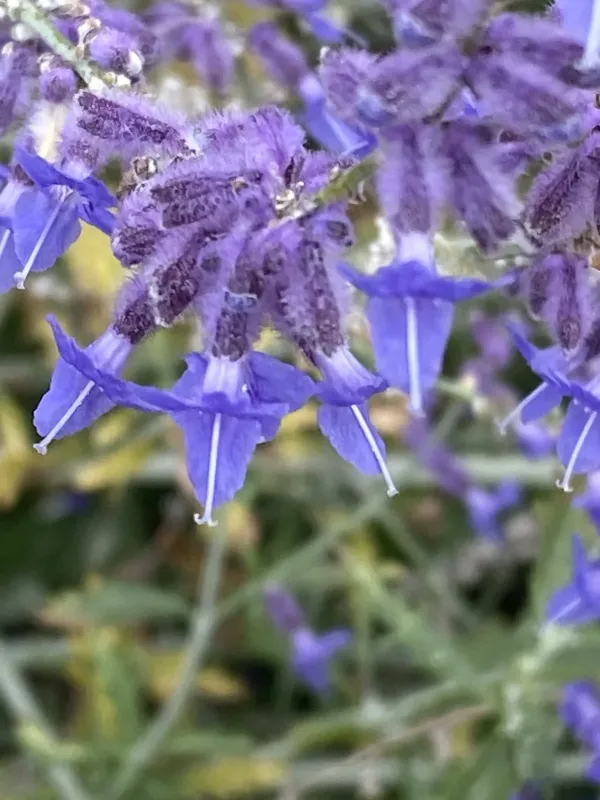
Russian sage (Perovskia atriplicifolia) is a deciduous subshrub belonging to the Lamiaceae family. It is widely recognized for its silvery foliage and long-lasting spikes of lavender-blue flowers.
The plant originates from the arid regions of Central Asia, specifically mountainous areas of Afghanistan and Pakistan, which explains its adaptation to rugged terrain.
It thrives in full sun and requires well-drained, lean soil. Unlike many ornamental crops, it actually performs better in nutrient-poor conditions, avoiding rich fertilizers that promote weak, leggy growth.
Drought tolerance is a signature trait of this species. Once established, it requires very little irrigation, making it a sustainable choice for water-restricted areas.
Cultural management includes severe annual pruning in early spring to maintain a compact, bushy habit and encourage vigorous flower production during the summer months.
Main diseases and pests
Root rot is the primary physiological threat to Russian sage, typically caused by heavy, water-logged soils. Ensuring excellent drainage is the most effective preventative measure.
Powdery mildew may occur in regions with high humidity or poor air circulation. Selecting planting sites with open access to wind and sun helps mitigate this risk.
Pest issues are minimal due to the high essential oil content in the stems and leaves, which acts as a natural deterrent against many herbivores and insects.
Occasional infestations of aphids can be managed with simple mechanical removal or horticultural soaps if the population reaches critical thresholds.
The plant is generally resistant to deer and rabbits, allowing it to be used successfully in agricultural landscapes where wildlife pressure is a concern.