
Periconia
Periconia Tode
The genus Periconia consists of anamorphic fungi classified within the Periconiaceae family. While primarily recognized as saprotrophic fungi that decompose organic matter in diverse soil environments, certain species have significant implications for agricultural production due to their pathogenic capabilities.
What the section contains

Periconia
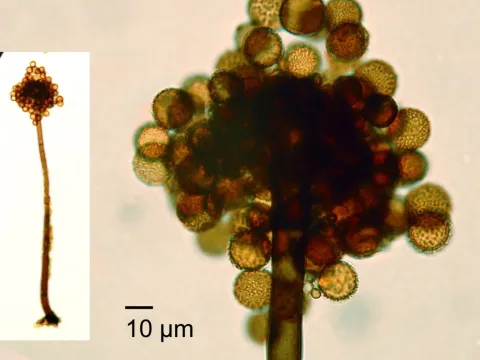
These fungi are found worldwide and are common in agricultural soils, frequently colonizing plant debris. Their biology is characterized by distinct, dark conidiophores, which facilitate their spread in humid environments. They often act as opportunistic colonizers, attacking plants that have already been weakened.
A notable species, Periconia circinata, is well-documented for its role in inducing root rot in sorghum. This infection is often associated with the production of host-specific toxins that cause severe chlorosis and systemic physiological distress to the plant, ultimately hindering growth.
Environmental factors such as high soil moisture and warm temperatures create optimal conditions for the growth and reproduction of Periconia. Because the fungus survives in the soil and on crop residues, it presents a persistent challenge in fields where monoculture practices are employed without proper management.
Effective management strategies focus on integrated pest management (IPM). Key practices include selecting resistant crop varieties, ensuring balanced soil nutrient levels to promote healthy root development, and implementing crop rotation schemes that break the life cycle of the pathogen by minimizing host availability.