
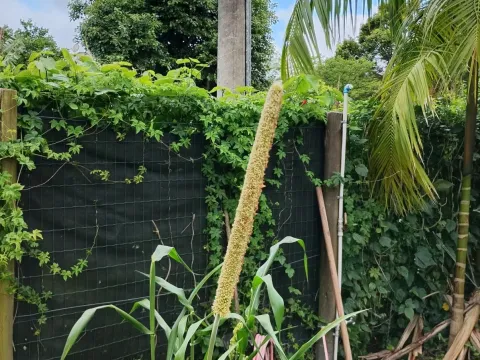
Pennisetum
Pennisetum
The sowing of Pennisetum is primarily conducted during the spring season once the soil temperature at planting depth reaches 15–18 degrees Celsius. The optimal timing involves waiting for steady warmth to avoid frost, which is lethal to the young sprouts of this heat-loving crop.
What the section contains


Pennisetum
Successful germination requires careful seedbed preparation; the soil should be fine-textured and adequately moist. Because of the small size of the seeds, the sowing depth is limited to 1–2 centimeters, necessitating the use of rollers to ensure proper soil-to-seed contact for uniform emergence.
In regions with long growing seasons, overseeding is possible after the harvest of winter crops, provided that irrigation is available. When planting in rows, spacing between lines is typically set at 45–60 centimeters to reduce competition between individual plants.
The seeding rate depends on the method of cultivation and seed quality, generally ranging from 5 to 8 kilograms per hectare. Early planting allows the crop to establish a robust root system and accumulate biomass before the critical development phases during mid-summer.
It is important to note that while Pennisetum exhibits high growth energy, it is sensitive to weed pressure during the initial weeks after germination, requiring vigilant weed control to ensure the crop is not suppressed.
Pennisetum belongs to the Poaceae family and is characterized by high light and thermal demands. As a tropical and subtropical plant, it utilizes C4 photosynthesis, making it highly efficient in capturing solar energy under hot summer conditions and high light intensity.
The crop has moderate soil requirements but achieves maximum productivity on fertile loams and sandy loams with a neutral pH. A key environmental requirement is the absence of waterlogging, as the root system is highly sensitive to hypoxia caused by excess soil moisture.
During the active growing season, Pennisetum requires consistent moisture despite its relative drought tolerance. Prolonged periods without rainfall can significantly slow biomass accumulation, making supplemental irrigation a standard practice in arid regions.
The optimal temperature range for plant growth lies between 25 and 35 degrees Celsius. The crop is extremely sensitive to sub-zero temperatures; even brief frost events can lead to the death of above-ground tissue and cause significant stress to the root system.
Intensive cultivation requires nitrogen fertilization, as Pennisetum is highly responsive to top-dressing, which promotes rapid regrowth after harvesting and increases the protein content in the green mass.
The yield of Pennisetum green mass depends on soil fertility, light intensity, and the frequency of mowing. Under favorable agrotechnical conditions, it is possible to obtain 3–5 full harvests per season, making it a highly productive crop for forage purposes.
On average, under intensive management with irrigation, dry matter yields can range from 12 to 20 tons per hectare. These figures vary significantly based on the specific species or cultivar utilized within the agricultural program.
To achieve peak productivity, maintaining a balance of mineral nutrition, including phosphorus and potassium applications, is essential. This practice supports plant vigor and extends the longevity of the stand in the field.
Productivity is directly linked to the plant's growth stage at the time of harvest. Early cutting provides high-quality forage rich in sugars and proteins, whereas delaying harvest leads to stem lignification and a decline in nutritional value.
Total yield is also determined by stand density, which should be maintained at approximately 200,000 to 300,000 plants per hectare to prevent thinning and ensure efficient resource utilization among the plants.
Pennisetum possesses relatively high natural resistance to many diseases, but poor management can lead to fungal infections. Rust diseases, which manifest as spots on the foliage, are among the most common threats to the crop.
In conditions of high humidity and dense stands, the risk of root rot increases significantly. To combat this, crop rotation and effective drainage are recommended to prevent the water-saturated soil conditions that trigger pathogen development.
Pests such as armyworms and various species of moths can cause severe damage to leaf surfaces during mass outbreak periods. Pest control relies on regular monitoring and, if necessary, the application of targeted insecticides.
Nematodes pose a specific risk to the root system, particularly in light-textured soils. If infection centers are detected, phytosanitary measures, including deep plowing and the use of resistant varieties, must be implemented immediately.
Disease prevention is primarily based on using high-quality certified seeds and soil disinfection before planting. Timely harvesting also helps mitigate pest issues by removing the thick vegetation that provides a concentrated habitat for insects.
Harvesting Pennisetum for forage is performed at the tillering or early heading stage. This is the period when the plant contains the highest concentration of nutrients, and stems have not yet become excessively woody, which is critical for silage or hay quality.
Harvest technology involves using forage harvesters if the crop is destined for silage or haylage. For hay production, the crop is cut and then tedded to accelerate moisture evaporation from the thick stems of the plants.
The cutting height is crucial for successful regrowth; it should not be lower than 8–10 centimeters. Maintaining this stubble height preserves the reserves of nutrients in the base of the stems, which are necessary for the rapid formation of new biomass.
Multiple harvest cycles are conducted throughout the season, with intervals designed to allow the plants to recover. The final harvest should be completed at least one month before the first frost to allow the plants to prepare for the dormancy period.
Once harvested, the material must be transported quickly to the processing or storage facility to avoid nutrient losses caused by plant tissue respiration and the natural fermentation processes that begin immediately after cutting.