
Feathertop grass
Pennisetum polystachyon
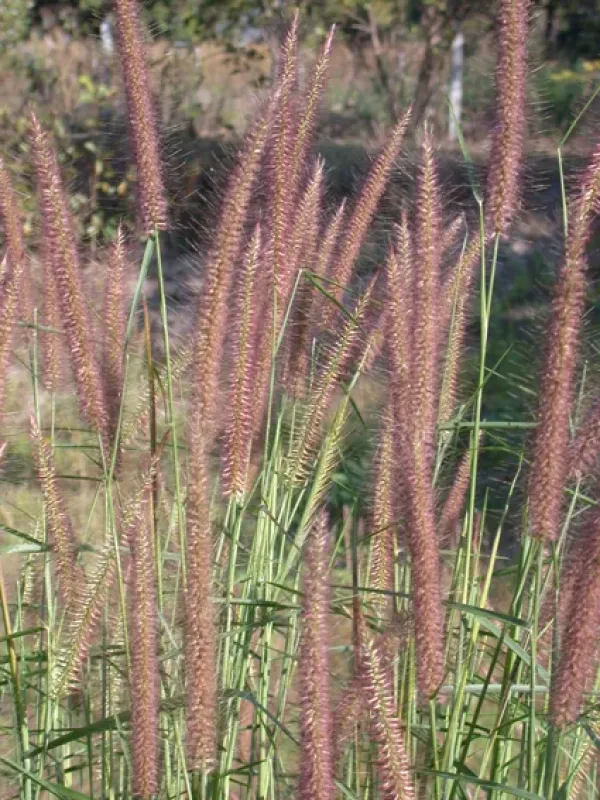
Description
Sowing dates
Pennisetum polystachyon, known as feathertop grass, is a perennial plant belonging to the Poaceae family. It is predominantly cultivated in tropical and subtropical regions, where it thrives under warm conditions and requires sufficient rainfall to establish a robust stand.
Sowing typically begins at the onset of the rainy season to ensure optimal soil moisture levels for germination. The seeds are small and should be sown at a shallow depth of approximately 1–2 centimeters, ensuring they maintain contact with the soil surface.
Vegetative propagation is a common and highly effective method for establishing new fields. By dividing established rootstocks, farmers can achieve faster colonization of the area and ensure a more uniform distribution of plants across the field.
For commercial production, maintaining a row spacing of 50–70 centimeters is recommended. This layout reduces plant competition for water and nutrients while allowing enough space for the plant to tiller vigorously and develop its biomass.
Effective land preparation is essential before seeding, as the crop is vulnerable to weed competition in its early development stages. Eliminating perennial weeds from the planting site ensures that feathertop grass can establish a dominant position in the field.
Growing requirements
This grass is highly adaptable to a wide range of soil types, showing tolerance to both poor sandy soils and heavy clay soils. However, the best biomass yields are consistently obtained on fertile, well-drained soils with a neutral pH balance.
Being a tropical species, it has a high requirement for heat and is sensitive to frost. It grows most actively in temperatures exceeding 20 degrees Celsius, making it unsuitable for cultivation in temperate climates with cold winters.
While the plant displays moderate drought tolerance, sustained high production relies on consistent rainfall or irrigation. In conditions of prolonged moisture stress, the plant's growth slows down, and the stems become lignified, reducing their palatability.
Full sun exposure is a critical requirement for this species. It does not perform well in shaded areas, as limited light exposure results in weak stem development, reduced tillering, and an overall decline in the density of the forage stand.
Soil nutrient management is vital for high-yield operations. The crop responds positively to nitrogen fertilization, which significantly boosts the protein content and the total dry matter yield, making the forage more valuable for livestock production.
Yield
The yield of Pennisetum polystachyon is highly dependent on management intensity. With adequate irrigation and balanced nutrient supply, farmers can expect to achieve multiple harvests within a single growing season due to the plant's rapid regrowth rate.
This crop is recognized for its high production potential, suitable for both fresh grazing and silage production. Its resilience allows it to recover quickly from repeated harvesting, which is a key advantage for sustaining pasture productivity.
Dry matter yield per hectare is the standard metric for assessing crop performance. Under optimal management, it provides a substantial amount of forage, frequently outperforming local native grasses in terms of both quality and quantity of biomass.
Timing the harvest is crucial to balance biomass volume with forage quality. Harvesting at the early heading stage ensures the highest concentration of digestible proteins, whereas delayed harvesting results in high fiber content and lower digestibility.
Integrating this grass with leguminous forage species in a mixed cropping system can enhance overall forage quality. Such practices not only improve the nitrogen status of the soil but also increase the nutritional profile of the harvested hay or silage.
Main diseases and pests
Fungal diseases, particularly those thriving in high-humidity environments, represent the primary threat to this crop. Rust infections can severely damage leaf tissue, which hinders photosynthesis and reduces the overall vigor of the stand.
Several insect pests, including lepidopteran larvae and various leaf-chewing beetles, can cause significant defoliation. Early detection is necessary to prevent extensive damage to the vegetative parts of the plant during the active growing phase.
Below-ground pests, such as soil-dwelling grubs, can feed on the root system, causing plant death and creating gaps in the field. Effective crop rotation and soil preparation are recommended to mitigate the impact of such pests.
An integrated pest management strategy, including the use of resistant varieties and mechanical field maintenance, is preferred over chemical interventions. Chemical control should only be used as a last resort, following all safety regulations.
Regular field scouting is essential for monitoring the health status of the crop. Early identification of infection patches allows for targeted action, preventing the rapid spread of diseases or pests across the entire planting site.
Harvesting
Harvesting is ideally conducted at the flowering stage to optimize the nutritional value of the forage. This ensures that the grass provides the necessary energy and protein required for efficient livestock weight gain and health.
For hay production, the use of mower-conditioners is highly recommended. The conditioning process crushes the stems, which facilitates faster moisture loss and ensures that the grass dries uniformly, preventing spoilage and mold during storage.
For grazing operations, rotational management is key. By moving livestock frequently between paddocks, farmers avoid overgrazing, which allows the grass to recover and extends the productive lifespan of the perennial pasture.
Post-harvest maintenance involves clearing any accumulated dead vegetation from the field. This practice promotes better airflow and reduces the risk of fungal buildup at the base of the plants, which supports healthier regrowth in the next cycle.
Proper storage is fundamental for maintaining the quality of harvested forage. Ensuring that hay is stored in a dry, well-ventilated area protected from rain is critical to prevent the development of harmful mycotoxins that can poison livestock.