
Pavetta revoluta
Pavetta revoluta
Description
Growing requirements
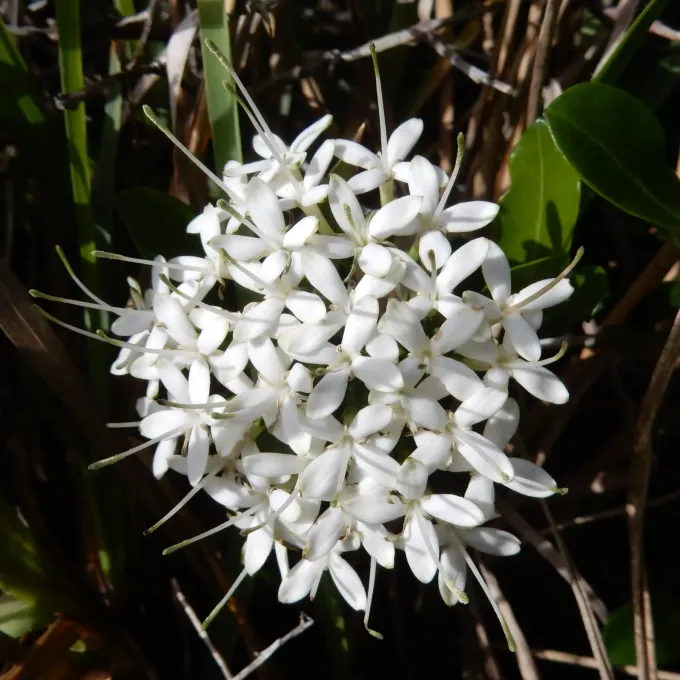
Pavetta revoluta is a unique shrub belonging to the Rubiaceae family, native to the coastal regions of Southern Africa. This plant is highly regarded in horticulture for its dense foliage and clusters of fragrant, white-to-cream flowers that bloom during the active growing season.
Botanically, the species is defined by its leathery, revolute leaves—meaning the edges roll backward—which provides a distinct appearance. It typically grows as a medium-sized shrub, making it suitable for both garden planting in mild climates and container cultivation in colder regions.
The plant requires well-drained, fertile soil, ideally with a slightly acidic profile. Achieving proper soil aeration is essential, as the roots are sensitive to compaction and prolonged saturation. Incorporating organic compost during planting significantly boosts the vigor of the shrub.
Regarding climate, Pavetta revoluta thrives in warm, humid environments. It is not frost-tolerant, meaning it must be protected in indoor environments or greenhouses when temperatures drop. Consistency in temperature is key to preventing leaf drop and promoting continuous floral development.
Agrotechnical practices involve consistent irrigation, allowing the topsoil to dry slightly between waterings. Fertilization with a balanced liquid fertilizer during the spring and summer months supports vigorous growth and ensures the plant maintains its lush, evergreen structure throughout the year.
Main diseases and pests
Common pests for this culture include scale insects and spider mites, which tend to congregate on the underside of the leaves. Manual removal or the application of horticultural oils is often sufficient for minor infestations if caught in the early stages.
Fungal issues such as leaf spot can occur if the foliage is kept excessively wet in low-light conditions. Maintaining good air circulation around the canopy and ensuring the plant is not overcrowded are the primary preventative measures for keeping the shrub healthy.