
Cape wedding bush
Pavetta capensis
Description
Growing requirements
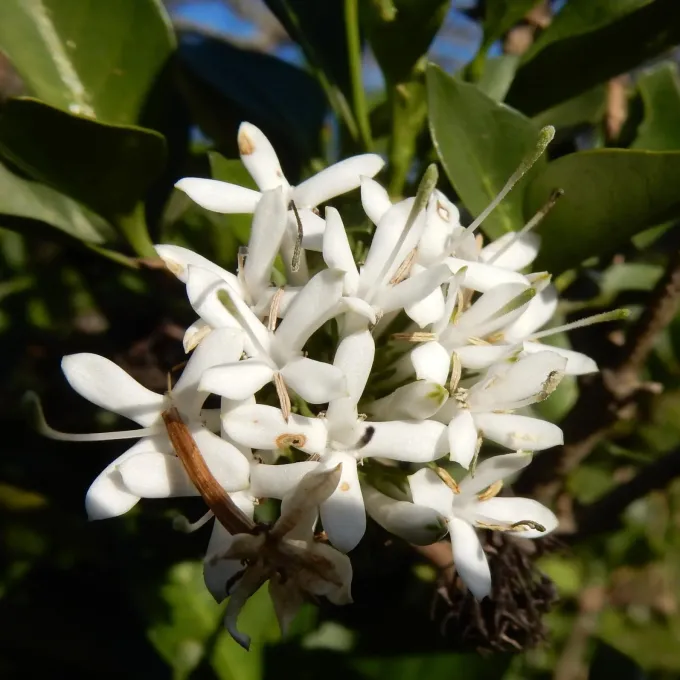
The Cape wedding bush (Pavetta capensis) is an evergreen ornamental shrub belonging to the Rubiaceae family. Native to the coastal regions of South Africa, it is highly valued for its clusters of white, star-shaped flowers that emit a pleasant fragrance.
As a tropical plant, it thrives in warm and humid environments. It is strictly a container plant in temperate regions, requiring a greenhouse or a climate-controlled conservatory where temperatures remain above 15°C throughout the year.
The plant prefers bright, indirect sunlight. While it appreciates high light levels to produce its profuse blooms, direct scorching afternoon sun can damage the foliage and cause the leaves to lose their glossy green appearance.
Soil requirements include a rich, well-draining potting medium. A mixture of peat, loam, and coarse perlite is ideal to ensure that the root system receives both adequate moisture and essential oxygen levels for development.
Watering should be consistent throughout the active growing season. It is crucial to maintain high humidity levels, which can be achieved through regular misting or by placing the pot on a tray filled with pebbles and water.
Main diseases and pests
Spider mites are the most common pest problem for Pavetta capensis when grown indoors. These small arachnids thrive in dry air, causing the foliage to appear speckled or yellow and eventually leading to significant leaf drop.
Scale insects and mealybugs can also infest the stems and undersides of leaves. These pests are particularly stubborn, and early detection is critical to prevent a widespread infestation across your plant collection.
Root rot, caused by overwatering or insufficient drainage, is the primary pathological threat. It typically manifests as blackening at the base of the stem and wilted foliage, even if the soil feels damp.
Effective management requires maintaining a strict balance of water and air in the root zone. Ensuring the pot has ample drainage holes and using sterile soil components significantly reduces the risk of fungal issues.
Integrated pest management, including regular inspections and the use of horticultural oils or systemic insecticides, is recommended to ensure the plant remains healthy and continues to bloom annually.