
Pavetta lanceolata
Pavetta lanceolata
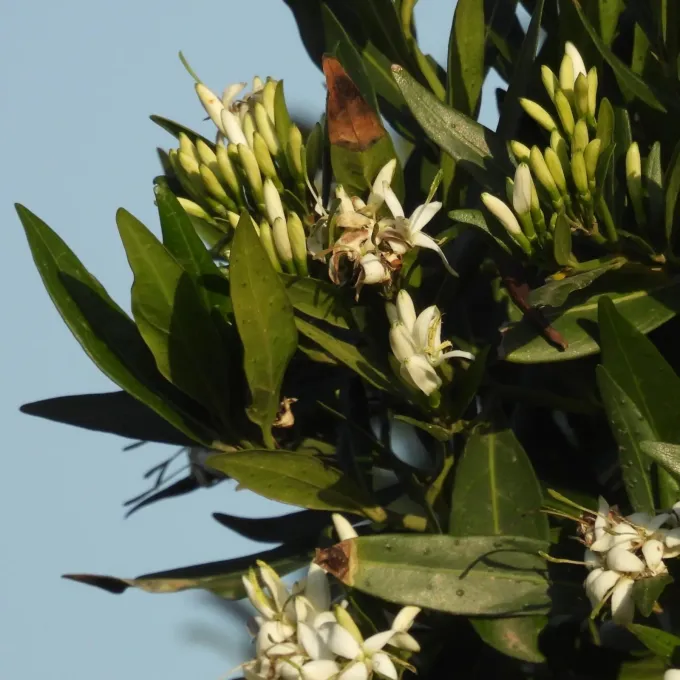
Description
Growing requirements
Pavetta lanceolata is a perennial evergreen shrub belonging to the Rubiaceae family. Known for its lush foliage and fragrant white inflorescences, this plant is a staple in tropical landscaping and is frequently grown as an ornamental specimen in suitable climates.
Originating from Southern and Eastern Africa, it thrives in environments that mimic its native habitat. It prefers warm temperatures and high humidity levels, making it highly suitable for greenhouses or tropical gardens where the temperature remains above freezing year-round.
The plant requires fertile, well-draining soil with a slightly acidic to neutral pH. Incorporating organic matter, such as compost or peat, into the planting site significantly improves root development and overall plant vigor throughout the growing season.
Light requirements are moderate to bright. While Pavetta lanceolata can tolerate partial shade, exposure to bright, filtered sunlight is optimal for encouraging dense blooming and maintaining the deep green color of its lance-shaped leaves.
Regular maintenance involves consistent watering and pruning. Pruning should be performed immediately after the flowering period to encourage new growth and maintain a compact, aesthetically pleasing shape for the shrub.
Main diseases and pests
Common pests affecting Pavetta lanceolata include aphids, scale insects, and spider mites. These pests thrive in dry environments and can quickly infest tender young shoots, causing stunted growth and leaf deformation if not managed early.
Fungal diseases, including leaf spot and powdery mildew, often occur when there is poor air circulation or excessive moisture on the foliage. Maintaining adequate spacing between plants and watering at the base helps mitigate these risks significantly.
Root rot is the most serious threat, usually caused by overwatering or poor soil drainage. It is crucial to ensure that the container or planting site has an efficient drainage system to prevent waterlogging around the root zone.
Monitoring the plant for signs of stress, such as wilting or discoloration, is essential. Early intervention with appropriate horticultural soaps or systemic fungicides can save the plant from severe damage caused by common tropical pests.
Implementing an integrated pest management strategy, including the use of neem oil or biological controls, is highly recommended for maintaining the health of the plant while preserving its delicate fragrant flowers.