
Parnassia pumila
Parnassia pumila
Description
Growing requirements
Parnassia pumila is a perennial herbaceous plant belonging to the Celastraceae family. Its natural distribution is largely concentrated in the alpine and subalpine regions of Asia, where it thrives in moist meadows and rocky slopes near water sources.
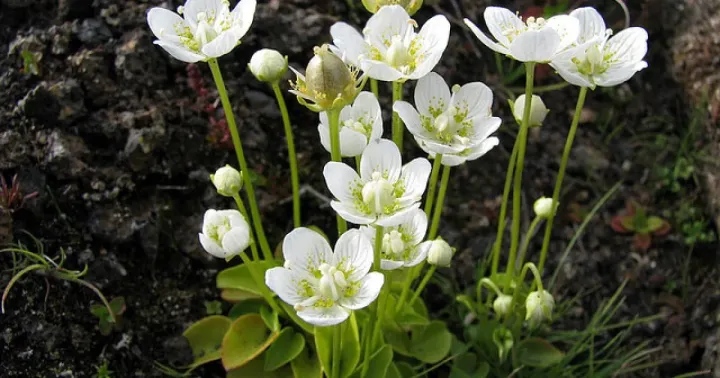
Botanically, the plant is distinguished by a basal rosette of heart-shaped leaves and a solitary flowering stem. The white flowers exhibit complex staminodes, which are evolutionary adaptations designed to attract specific insect pollinators in harsh high-altitude environments.
Cultivation of Parnassia pumila requires mimicking its native habitat. It necessitates a consistently moist substrate with excellent drainage, as the roots are highly susceptible to rot if water stagnation occurs, despite the plant's preference for high humidity.
The soil should be slightly acidic to neutral, rich in organic matter, and aerated. In an agricultural or horticultural setting, the plant is best suited for cold frames or specialized alpine gardens where environmental factors can be meticulously controlled.
While not a commercial crop, the plant holds value in specialized nursery trade for rock gardens. Propagation is primarily achieved through seeds, which require a cold stratification period to break dormancy and ensure successful germination.
Main diseases and pests
The most significant pathological threat to Parnassia pumila is fungal infection, particularly root rot caused by poor soil drainage. When the root zone remains waterlogged for extended periods, the plant’s vigor decreases rapidly.
Gastropod pests, such as slugs and snails, represent a persistent challenge for the species. Their feeding habits can destroy the tender foliage, necessitating the use of perimeter barriers or targeted manual removal in small-scale plantings.
Aphid infestations are frequently observed on the developing flower stalks. These insects deplete the plant of essential nutrients and can transmit viral diseases if not controlled through early manual intervention or organic soap-based treatments.
Chlorosis is a common sign of nutritional deficiency or incorrect soil pH. Maintaining a steady supply of balanced nutrients and monitoring the acidity levels of the irrigation water is essential for optimal health and vigor.
Winter survival often depends on preventing crown rot. During dormant seasons, protecting the plant from excessive moisture and shifting temperatures is crucial to ensure the survival of the crown and the successful emergence of growth in the following spring.