
American grass-of-Parnassus
Parnassia glauca
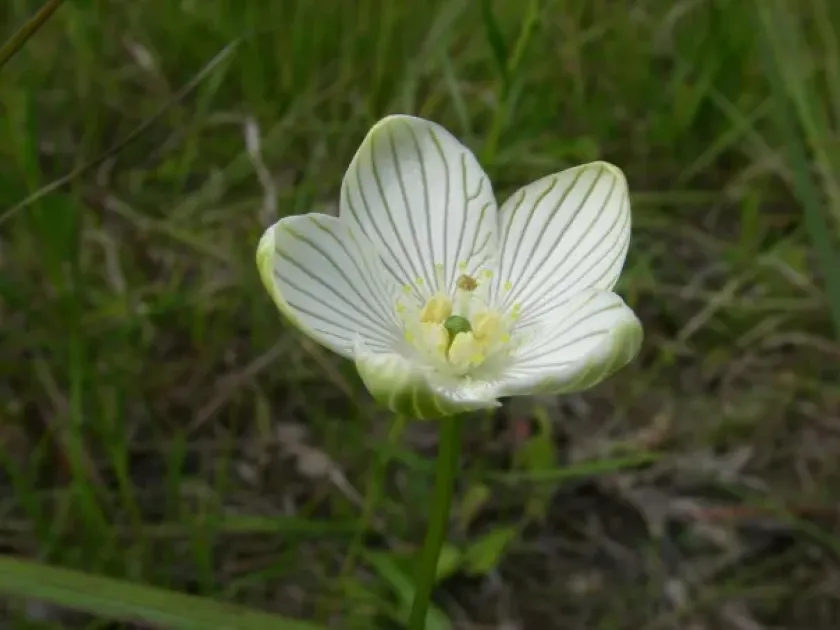
Description
Growing requirements
Parnassia glauca, commonly known as American grass-of-Parnassus, is a perennial herbaceous plant belonging to the Celastraceae family. It is widely recognized for its preference for highly specific, nutrient-rich, and moist environmental conditions.
The native distribution of this species is largely centered in North America. It is typically found in calcareous fens, wet meadows, and seepage areas where water is alkaline and consistently present throughout the growing season.
Cultivation of this plant requires a deep understanding of its ecological niche. It demands a substrate that mimics its natural habitat, typically consisting of peat mixed with gravel or limestone chips to ensure proper mineral content.
Climate requirements for this plant are focused on steady moisture levels. It thrives in cool to moderate temperatures and requires high atmospheric humidity to prevent desiccation of its succulent-like leaves.
A successful cultivation strategy involves keeping the soil consistently wet but never stagnant. The plant performs best when it has access to groundwater or a reliable irrigation system that provides mineral-rich water.
Main diseases and pests
The most significant threat to Parnassia glauca is the degradation or drainage of its wetland habitats. As a specialist plant, it lacks the resilience to adapt to dry or nutrient-poor conditions caused by landscape changes.
Fungal pathogens represent a primary concern in artificial cultivation environments, particularly when ventilation is poor. Root rot can develop quickly if the soil lacks oxygen or if temperatures spike inappropriately.
Slugs and snails are the most common pests that affect the foliage. Because the plant grows relatively slowly, significant herbivory by these mollusks can weaken the plant and reduce its ability to bloom.
Competition from invasive plant species is a major challenge for the plant's survival. Without manual maintenance to keep competing vegetation at bay, Parnassia glauca can easily be outcompeted for sunlight and soil nutrients.
To minimize threats, gardeners should focus on maintaining a clean growing area and ensuring the stability of the substrate composition. Regular monitoring for signs of rot or insect damage is essential for long-term health.