
Cloud Parnassia
Parnassia nubicola
Description
Growing requirements
Cloud Parnassia (Parnassia nubicola) is a herbaceous perennial belonging to the Celastraceae family. It is native to the Himalayan region, where it thrives in moist, cool, high-altitude alpine meadows and near mountain streams.
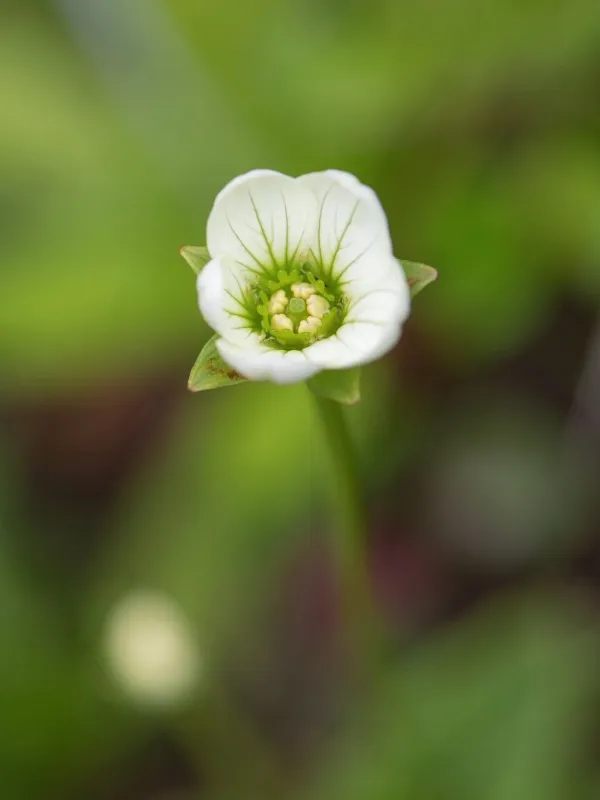
The plant is characterized by a basal rosette of heart-shaped leaves and single, terminal white flowers. A unique morphological feature is the presence of fringed, gland-tipped staminodes, which are highly specialized structures used to attract pollinators in its native environment.
This species requires a temperate climate to flourish. In cultivation, it performs best in regions with cool summers and high humidity. It is an ideal candidate for specialized rock gardens or bog gardens where environmental conditions can be carefully controlled.
Soil requirements are quite specific; the plant demands a well-drained but consistently moist substrate. It thrives in soils rich in organic matter, such as leaf mold or peat-based mixes, and prefers a pH that is neutral to slightly acidic.
Placement in the garden should provide partial shade, as intense direct sunlight can cause leaf scorch and heat stress. Consistent hydration is critical, but water must not stagnate around the crown of the plant to avoid rot.
Main diseases and pests
Root rot is the primary physiological and pathological threat to Cloud Parnassia. This typically occurs in poorly drained soils or during prolonged periods of winter wetness when the plant is dormant and cannot process excess water.
Slugs and snails are the most significant pests, as they are attracted to the succulent foliage of the plant. Gardeners should implement protective measures, such as copper tape or organic baits, to prevent severe leaf defoliation.
Powdery mildew may occur if air circulation is inadequate. Ensuring that the plants are not overcrowded is the most effective way to prevent the spread of fungal spores during humid weather conditions.
Aphids might occasionally infest the developing flower buds during the growth phase. Regular inspection allows for manual removal or the application of insecticidal soaps to maintain plant vigor without chemical damage.
Maintaining a clean growing area by removing decaying foliage ensures that the crown remains healthy and reduces the habitat for potential fungal pathogens during the off-season.