
Parinari nonda
Parinari nonda
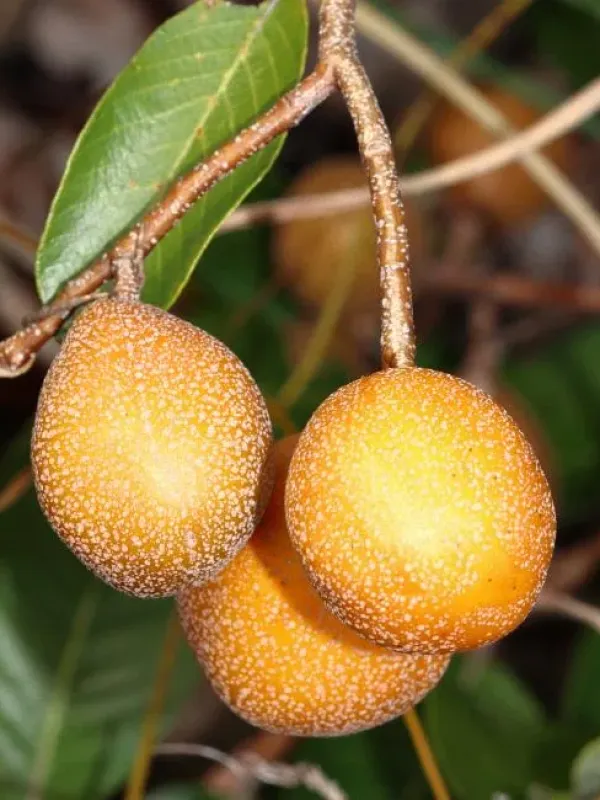
Description
Growing requirements
Parinari nonda is an evergreen tree species classified within the Chrysobalanaceae family. It is native to the tropical landscapes of Northern Australia and parts of New Guinea, where it thrives in open woodland habitats and coastal environments under a distinct monsoon-influenced climate.
The tree requires a tropical climate with consistent temperatures to maintain its metabolic activity throughout the year. It exhibits a preference for sunny, well-lit locations, as exposure to sufficient solar radiation is essential for successful flowering and the subsequent development of its fruit.
Regarding soil conditions, Parinari nonda performs best in well-drained soils, ranging from sandy to loamy textures. While it is adaptable to various soil types, maintaining adequate moisture levels is critical during the establishment phase, even though the species is generally resilient to periodic dry spells due to its evolutionary adaptations.
From a botanical standpoint, the plant is characterized by a sturdy structure and dense, leathery foliage that helps regulate water loss. These features enable the tree to survive in competitive ecological niches, where it often forms a stable part of the understory or the edge of woodland habitats.
The economic value of this species is largely centered on its traditional use as a source of food. The fruits are harvested for their edible pulp, which holds nutritional significance for local communities. Additionally, the wood is valued for its durability, finding use in various local crafts and construction purposes where resistant materials are required.
Harvesting
Harvesting is typically conducted manually when the fruits attain optimal ripeness, often determined by the change in skin texture and slight softening. Timely harvest is necessary to ensure the best flavor profile and to prevent fruit drop, which may attract ground-dwelling fauna in the wild.