
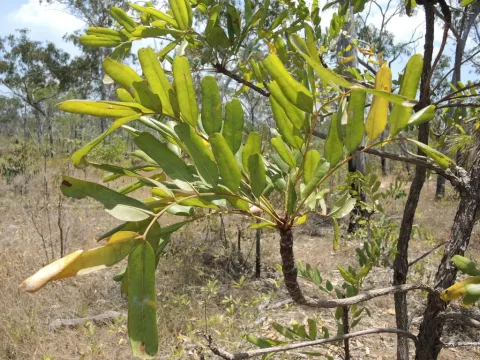
Owenia
Owenia
Owenia is not a typical field crop, so its propagation is generally managed in specialized forest nurseries. Seeds are extracted from mature fruits, cleaned of pulp, and sown in a prepared substrate immediately after harvesting.
What the section contains


Owenia
High germination rates are observed when using fresh seeds, as they quickly lose viability during long-term storage. For successful germination, it is essential to maintain stable soil moisture and a temperature of around 25 degrees Celsius.
In their natural habitat, seeds are dispersed by birds and animals, which facilitate natural growth. In nursery cultivation, seedlings are transplanted once the first two pairs of true leaves emerge to support root development.
Hardening off young plants before planting them in their permanent location is a critical stage. This process helps seedlings adapt to direct sunlight and temperature fluctuations in arid environments.
Planting density depends on the purpose of cultivation. If the goal is timber production, the spacing between rows should be wide enough to encourage a straight, thick trunk without excess branching.
Owenia belongs to the Meliaceae family and consists of woody plants adapted to the specific conditions of the Australian climate. It is a heat-loving crop that thrives in tropical and subtropical regions.
The crop shows high resistance to prolonged droughts, making it a promising option for reforestation in challenging environments. It can survive in areas with irregular rainfall by efficiently managing water reserves.
The plant prefers well-drained sandy or loamy soils and does not tolerate waterlogging in the root zone. Proper aeration is a critical factor for the health and longevity of the tree.
Optimal soil pH for Owenia ranges from neutral to slightly acidic. The plant can withstand temporary salinity but performs significantly better in fertile soils rich in organic matter.
For intense growth, the tree requires maximum sunlight. Partial shade may be beneficial during early development, but mature trees require full sun for consistent fruit production.
Economic use of Owenia covers both the harvesting of edible fruits and high-quality timber. Fruits of species such as Owenia acidula are known for their culinary qualities and high vitamin content.
The flavor is often described as tart and acidic, making them suitable for jams, jellies, and refreshing beverages. In natural conditions, the annual yield can reach several kilograms per tree.
Owenia wood is noted for its exceptional strength and decorative properties, making it highly valued in furniture manufacturing. It is easy to polish and resistant to pests, ensuring a long service life.
Commercial cultivation requires long-term planning, as the tree begins to yield a stable harvest only several years after entering its active growth phase. Trunk growth rates are moderate, which should be considered in wood production cycles.
The economic value also lies in its role in agroforestry. It serves as an effective windbreak, preventing soil erosion and creating a favorable microclimate for other agricultural crops.
Typical threats for Owenia include fungal diseases that develop in high humidity when there is insufficient canopy ventilation. Timely pruning helps minimize the risk of infection.
Insect pests, including leaf-eating caterpillars and borers, can damage young seedlings and foliage. Regular monitoring allows for the early detection and management of infestations.
In arid regions, termites pose a significant threat to the root system and base of mature trees. Biological pest control methods are frequently employed to protect the plantations.
Bacterial infections are rare but can occur following mechanical damage to the bark during maintenance. It is important to handle trees carefully to prevent creating entry points for pathogens.
Selecting sites with natural drainage effectively eliminates the risk of root rot. An integrated pest management system is essential for maintaining a stable yield.
Fruit harvesting is carried out manually as the fruits ripen, which is visually determined by a color change in the skin. Since ripening is not always uniform, multiple visits to the orchard are often required.
The fruits are delicate, so they should be collected in soft containers to prevent bruising. After harvest, the produce must be kept out of direct heat to preserve the nutritional qualities of the pulp.
Timber harvesting is conducted through planned logging based on the age and trunk diameter of the trees. Properly dried wood is essential to prevent cracking and warping in finished products.
In commercial operations, fruit processing is often done close to the harvest site to minimize transportation losses. Canning and flash-freezing are the primary methods for long-term storage.
Harvest volume depends heavily on the weather conditions of the season. A favorable spring promotes better flowering, which directly results in a higher quantity of marketable produce.