
Western sweetroot
Osmorhiza occidentalis
Description
Growing requirements
Western sweetroot (Osmorhiza occidentalis) is a hardy perennial herb that is a member of the Apiaceae or carrot family. It is native to the western regions of North America, where it thrives in high-elevation montane meadows and woodland areas with cool, moist conditions.
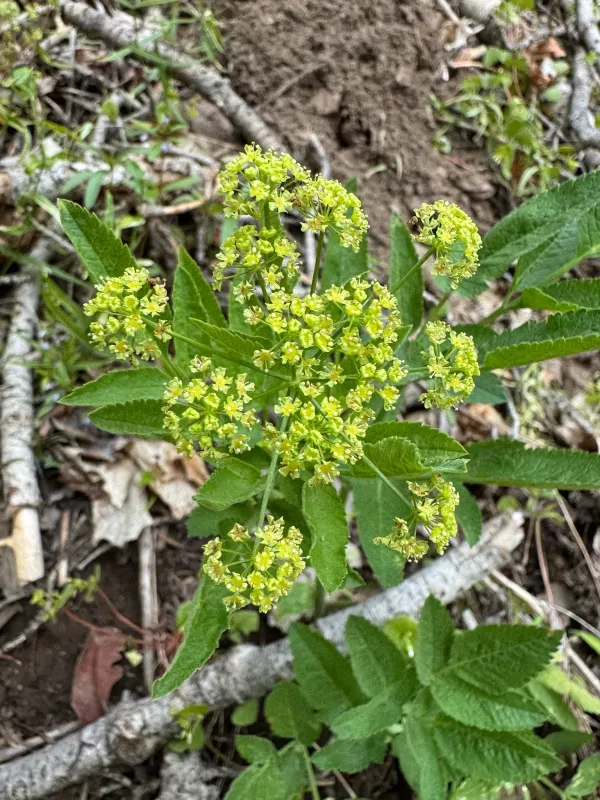
The plant is easily identified by its anise-scented roots and foliage. Botanically, it produces compound leaves and small, white flowers arranged in umbels, which is a hallmark feature of the family. Its growth habit is typically upright, with thick, fleshy taproots that store nutrients for the dormant season.
For successful cultivation, Western sweetroot requires moist, well-draining soil rich in organic matter. It performs best in partial shade, mimicking its natural understory or mountain meadow habitat, as it is sensitive to intense heat and prolonged exposure to direct sunlight.
Agrotechnical management involves maintaining consistent soil moisture, especially during the spring growth phase. While the plant is quite hardy, it appreciates a layer of mulch to maintain root coolness during the peak of summer, which helps in preserving its aromatic properties.
The economic and practical use of this plant is primarily rooted in its ethnobotanical history. The roots have been utilized for their sweet, licorice-like flavor as a seasoning and in traditional herbal preparations for their soothing properties on the respiratory system.
Main diseases and pests
Aphids represent a common threat to Western sweetroot, particularly during the tender growth stages in early spring. These pests cluster on the undersides of leaves and succulent stems, potentially hindering plant development if left untreated through biological pest control measures.
Root rot is a critical risk factor, primarily induced by waterlogged soil conditions. Proper site selection focusing on excellent drainage is essential to prevent the accumulation of moisture, which can otherwise lead to the death of the taproot system in susceptible specimens.
Powdery mildew is a fungal pathogen that often manifests under conditions of poor air circulation and high humidity. Management strategies include ensuring adequate plant spacing and removing any foliage that shows early signs of white fungal growth to prevent further spread.
Rust diseases can impact the health of the leaves, manifesting as discolored spots on the surface. These pathogens are best managed through cultural practices, such as removing infected leaves immediately upon detection and avoiding overhead irrigation that leaves foliage wet for extended periods.
Soil-dwelling larvae can periodically damage the root system, impacting the overall vigor of the perennial. Regular monitoring of soil health and maintaining a balanced ecosystem within the planting area helps in reducing the impact of these opportunistic pests on the plant's long-term health.