
Sweet cicely
Osmorhiza chilensis
Description
Growing requirements
Sweet cicely (Osmorhiza chilensis) is a perennial herbaceous plant belonging to the Apiaceae family. Native to the woodlands of North and South America, it thrives in shaded or semi-shaded environments where soil organic content is high and moisture levels are consistent.
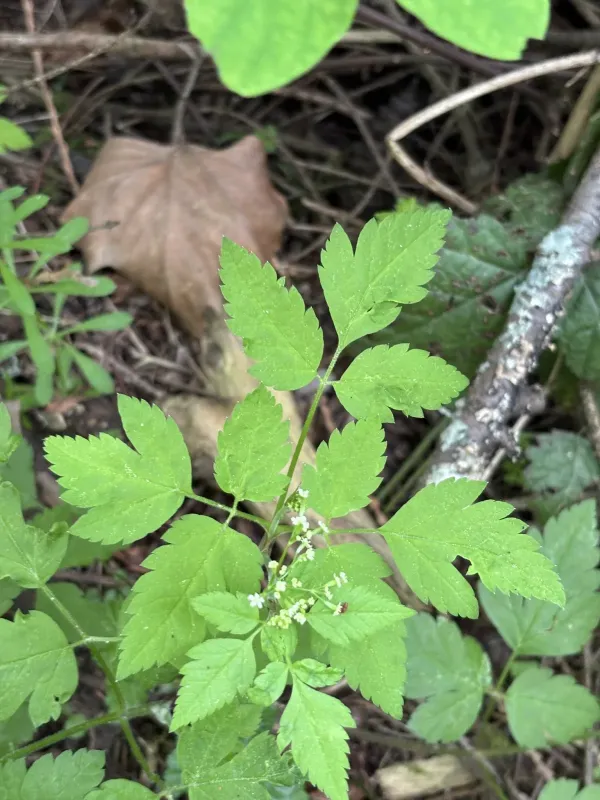
The plant is easily recognized by its fern-like, compound leaves and compound umbels bearing small, white flowers. A defining characteristic of this species is the anise-scented volatile oils found throughout its roots and seeds, which are highly aromatic.
In agricultural settings, the plant requires well-drained, nutrient-rich soil with a neutral to slightly acidic pH. Avoiding compacted soil is essential, as the root system requires adequate aeration to prevent rot, particularly during the dormant season.
The ideal climate for this crop is temperate and humid, mimicking its natural forest habitat. While it exhibits strong shade tolerance, adequate ambient light is necessary for the plant to successfully produce viable seeds during the flowering stage.
The plant serves primarily as a medicinal and culinary aromatic herb. Traditionally, various indigenous cultures have utilized the roots as a potent flavoring agent and for traditional remedies meant to soothe digestive issues and respiratory symptoms.
Main diseases and pests
The crop is occasionally prone to powdery mildew, especially if the planting density is too high or if air circulation is restricted. Managing spacing and maintaining healthy soil microbial activity are key cultural practices to prevent these issues.
Pests such as aphids and specialized coleopterans can cause minor damage to the foliage and stems. Growers are encouraged to use integrated pest management strategies, focusing on biological controls rather than synthetic pesticides to maintain the quality of the aromatic compounds.