
Orthosiphon aristatus
Orthosiphon aristatus
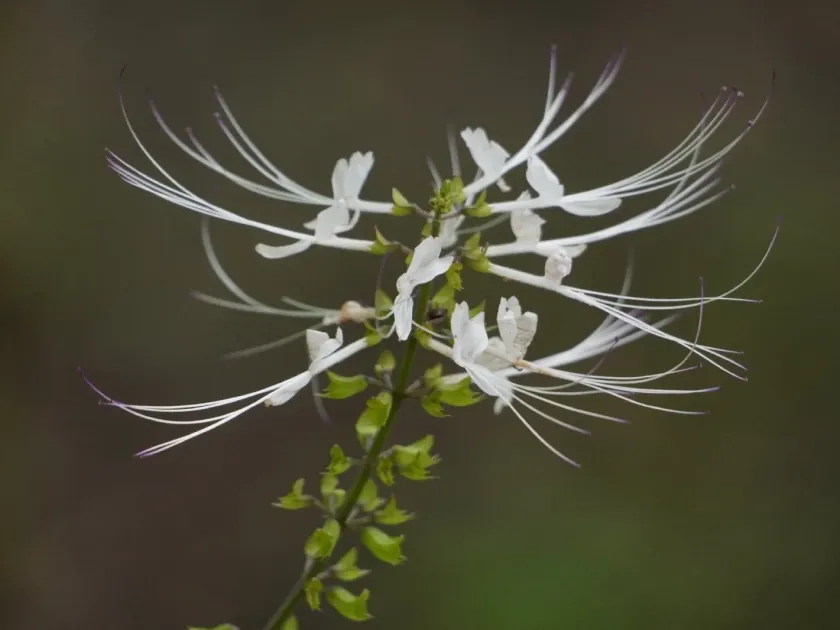
Description
Sowing dates
Orthosiphon aristatus is a perennial herbaceous plant belonging to the Lamiaceae family. On an industrial scale, it is cultivated primarily in tropical and subtropical regions as a medicinal crop, widely known as "Java tea" or "cat's whiskers."
Propagation of this crop in agricultural conditions is most often carried out by seeds in a greenhouse environment or vegetatively through cuttings. Sowing seeds requires maintaining a stable high temperature, as seedlings are extremely sensitive to temperature fluctuations and require high substrate moisture.
To obtain high-quality medicinal raw materials, it is necessary to maintain optimal planting density, which ensures the full development of the plant's aerial parts. In temperate climates, cultivation is possible only as an annual crop using seedlings or in greenhouses.
Soil preparation includes deep loosening and the application of organic fertilizers to ensure good aeration and nutrition of the root system. Transplanting seedlings into the open ground is performed only after the threat of frost has passed and the soil has warmed up to at least +15 degrees Celsius.
The crop places high demands on sunlight, so open, well-lit areas are chosen for plantations. A lack of insolation during the growing season leads to a significant decrease in the concentration of biologically active substances in the leaves and shoots.
Growing requirements
The plant is a heat-loving and moisture-loving representative of tropical flora, so maintaining air humidity at a level of 70-80 percent is a critical factor for successful cultivation.
Soils for Orthosiphon should be light, fertile, and have a slightly acidic to neutral pH. Stagnant water in the root zone is unacceptable, as it immediately leads to the development of root rot and the death of the plant.
During growth, the crop actively consumes nitrogen, phosphorus, and potassium, which necessitates regular fertilization throughout the entire growing season. Supplemental feeding is especially important after each mass harvest of raw materials to stimulate the regrowth of new shoots.
Climate requirements include the absence of extremely low temperatures, as even a short-term cold snap below +10 degrees Celsius inhibits physiological processes. The ideal temperature range for the accumulation of phytomass is +22...+28 degrees Celsius.
Irrigation must be regular, especially during the phase of active leaf mass growth. In industrial conditions, drip irrigation systems are preferred, as they allow for the metered supply of water and dissolved nutrients directly to the root zone.
Main diseases and pests
The main pests of Orthosiphon in greenhouse conditions are spider mites and aphids, which can quickly destroy the tender young leaves of the plant. Approved insecto-acaricides are used to combat them, strictly adhering to pre-harvest intervals.
Fungal diseases, such as powdery mildew and various types of leaf spots, develop when humidity levels are disrupted or plantation ventilation is poor. Prevention includes the timely removal of affected parts and maintaining proper spacing between plants.
Root rot, caused by pathogenic fungi, is often observed when the soil is waterlogged. This disease is difficult to treat, so the best strategy is to prevent excessive watering and improve the drainage characteristics of the soil.
Weed control is critically important during the seedling establishment phase, as Orthosiphon grows slowly in its early stages and competes poorly with weeds. Manual weeding or the use of mulching materials is recommended to protect the soil surface.
In regions with high humidity, it is necessary to conduct regular monitoring of plantations for signs of bacterial infections. Affected specimens should be immediately removed from the field to prevent the spread of infection throughout the plantation.
Harvesting
Harvesting medicinal raw materials of Orthosiphon involves periodic pruning of the tops of shoots with several pairs of leaves. The first harvest is usually performed when the plants reach the active flowering phase, as the concentration of active substances is at its maximum at this time.
To ensure multiple harvests per season, regular trimming of side shoots is conducted to stimulate plant bushing. After each harvest, fertilization is necessary so that the plant can restore its vegetative mass.
Harvested raw materials must undergo rapid drying at temperatures not exceeding +40...+45 degrees Celsius. Overheating during the drying process leads to the destruction of glycosides, which reduces the pharmacological value of the final product.
Drying is carried out in special dryers or in well-ventilated shaded structures, avoiding direct sunlight on the raw materials. Quality raw materials should have a greenish color and retain a characteristic faint aroma.
The finished raw material is packed in paper or fabric bags to ensure normal air exchange during storage. The shelf life of properly dried and stored Orthosiphon (in a dry, dark place) is usually up to three years.