
Opuntia quitensis
Opuntia quitensis
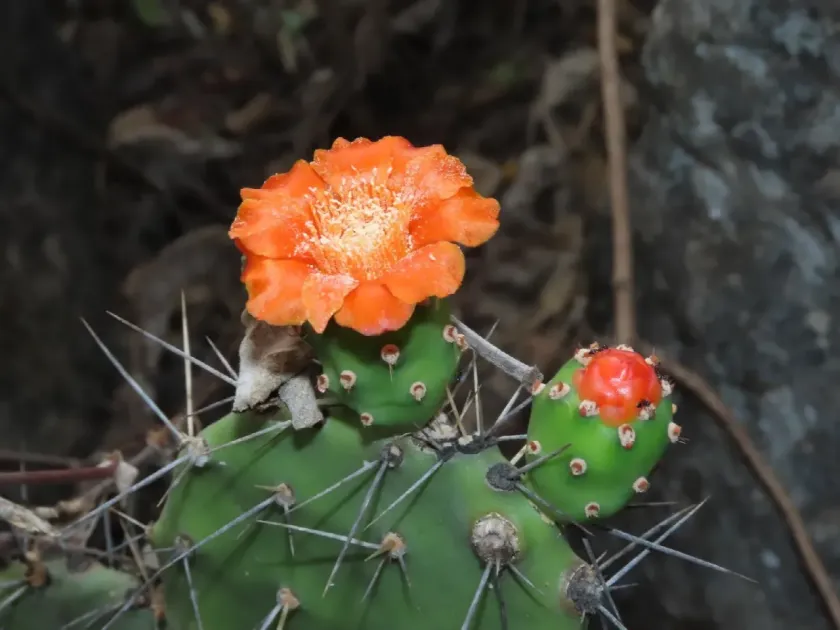
Description
Growing requirements
Opuntia quitensis belongs to the Cactaceae family. It is a perennial succulent plant characterized by its erect, jointed stems, which can reach significant heights under optimal environmental conditions.
The native range of this species includes the mountainous regions of South America, specifically Ecuador and Peru. The crop is evolutionary adapted to arid conditions, preferring well-drained, rocky, or sandy soils with a neutral or slightly alkaline pH.
Successful cultivation requires intense solar exposure throughout the entire growing season. The plant does not tolerate stagnant water in the root zone or high atmospheric humidity, which can lead to rot and plant death.
The temperature regime should remain consistently warm, although the species can withstand the sharp nocturnal temperature drops typical of its high-altitude habitat. In commercial settings, cultivation is primarily conducted in open fields in arid climates.
Agrotechnics include minimal watering during the active growth phase and a strict dry rest period. Propagation is mainly vegetative, achieved by rooting individual cladodes, which ensures the preservation of the parent plant's characteristics.
Yield
The agricultural use of Opuntia quitensis is focused on fruit production and biomass. Its fruits have a pleasant taste and are rich in vitamins, essential minerals, and antioxidants, making them highly desirable in local food markets.
In various South American regions, young cladodes are consumed as a vegetable crop after the spines and glochids are removed. They are a low-calorie food source, providing significant dietary fiber.
Beyond food production, the plant serves as a living fence, effectively preventing soil erosion on slopes. Its dense structure acts as a natural windbreak and helps maintain soil moisture for adjacent vegetation.
The flowers are ornamental, which is often utilized in xeriscaping or drought-tolerant landscaping. The plant is valued for its high regenerative capacity, allowing for multiple biomass harvests per season without depleting the mother plant.
Yield efficiency depends on planting density. With proper management, plantations can remain productive for several decades, providing a sustainable income source through consistent harvesting.
Main diseases and pests
Common pests affecting Opuntia quitensis include members of the Hemiptera order, such as scale insects and mealybugs. These pests feed on the plant sap, weakening the structure and creating pathways for secondary infections.
Pathogenic fungi, such as species of Fusarium and Phytophthora, pose a major threat when irrigation is excessive or soil aeration is poor. Infestation symptoms include dark spots on stems followed by tissue softening.
To combat diseases, it is essential to follow strict irrigation protocols and ensure proper drainage. In cases of severe infestation, specialized systemic insecticides should be applied to manage pest populations effectively.
An important preventive measure is the quarantine of all new nursery stock before integrating them into the main plantation. This reduces the risk of introducing diseases and pests to existing healthy plants.
Mulching the soil surface around the base of the plant with gravel or crushed stone is an effective agrotechnical practice to prevent fungal infections by limiting contact between the plant tissues and damp soil.
Harvesting
Fruit harvesting is carried out by hand once the fruit reaches full maturity, indicated by the skin's characteristic color change. It is mandatory to use protective gloves and specialized tools to safely remove glochids, which can cause skin irritation.
Harvesting of cladodes (young stems) is typically done in the early morning when moisture content is at its peak. After harvesting, immediate mechanical cleaning is required to remove spines, preparing the crop for storage or processing.
The produce should be sorted by size and maturity immediately after harvesting. Fresh fruits have a limited shelf life at room temperature and require prompt transport or cold storage to maintain quality.
In industrial processing, the fruit is often juiced for beverages, jams, or natural food dyes. The biomass of the pads can also be processed into feed additives for livestock in drought-prone areas.
Harvesting techniques must avoid damaging the main stems to ensure the plant's continued growth and health. Well-organized harvesting cycles are essential for the longevity and profitability of the Opuntia plantation.