
Opuntia oricola
Opuntia oricola
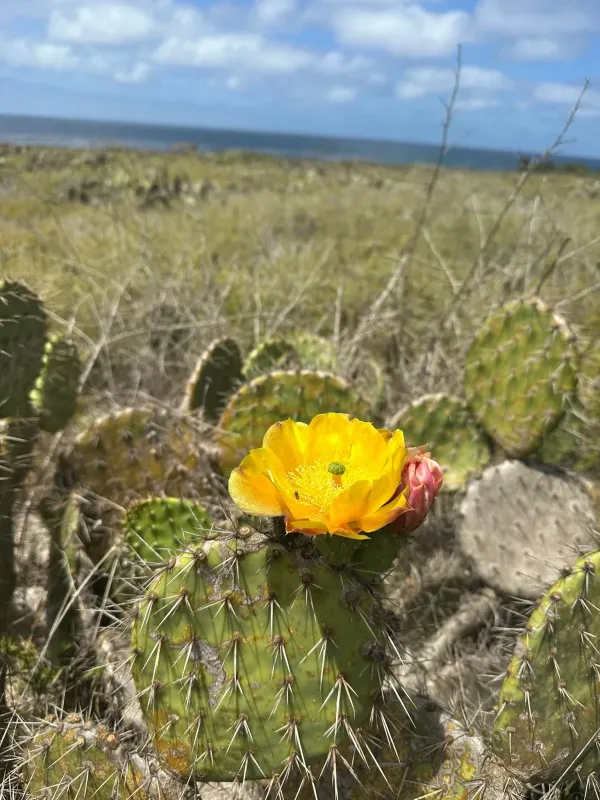
Description
Growing requirements
Opuntia oricola is a perennial shrub belonging to the Cactaceae family, known for its robustness in arid environments. Originally native to coastal and inland regions of California and Baja California, it thrives in challenging habitats.
The plant requires full sun exposure to maintain its structural integrity and reproductive health. In agricultural settings, it is best suited for climates with high solar radiation and low relative humidity levels.
Soil requirements are strict regarding drainage. It grows best in sandy, rocky, or gravelly soil profiles that allow water to pass through rapidly, preventing the moisture retention that is fatal to its root system.
Cultivation practices involve minimal irrigation, focusing on watering only during the active growing season. The plant's ability to store water allows it to withstand prolonged droughts, making it a sustainable choice for water-scarce farming.
Economically, Opuntia oricola is valued for its fruits, which have culinary potential, and its cladodes, which can serve as emergency forage for livestock after mechanical removal of the spines.
Main diseases and pests
The primary threats include fungal infections like stem rot, typically triggered by high humidity or poor water management. These pathogens can rapidly cause internal necrosis of the succulent segments.
Pests such as mealybugs and scale insects pose significant challenges, as they colonize the surface and crevices of the plant, weakening it by sucking out nutrient-rich sap.
Cactus moth larvae (Cactoblastis cactorum) are particularly destructive. They tunnel through the pads, which not only causes direct damage but also makes the plant vulnerable to secondary bacterial attacks.
Root-knot nematodes can severely affect the plant's uptake of water and nutrients, resulting in stunted growth and a general decline in the vitality of the entire cactus stand.
Integrated pest management, including regular inspection and the use of targeted biological controls, is essential to maintaining healthy populations in commercial cultivation.