
Hitchcock's prickly pear
Opuntia hitchcockii
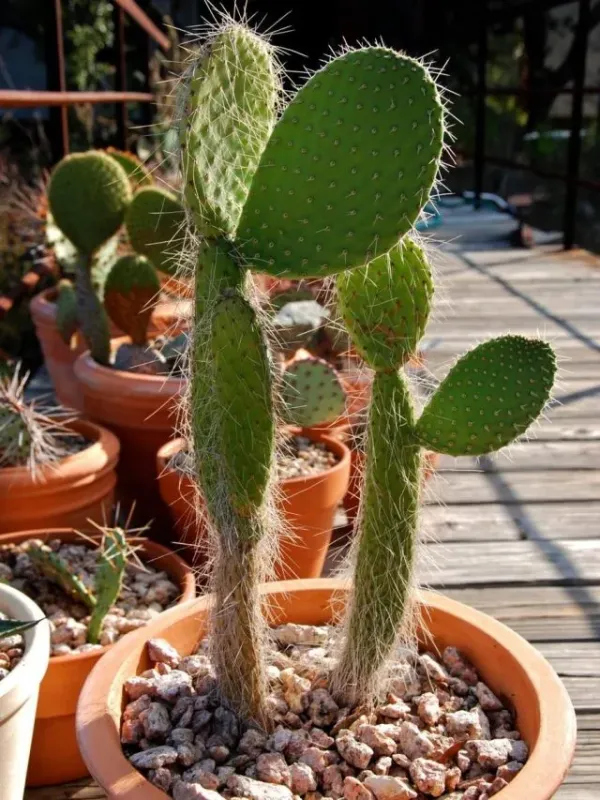
Description
Growing requirements
Hitchcock's prickly pear (Opuntia hitchcockii) is a member of the Cactaceae family, native to the arid regions of Mexico. This plant is well-adapted to environments characterized by intense solar radiation and minimal rainfall, making it a robust subject for dryland agriculture.
The species features distinct succulent stems known as cladodes. Botanically, it is optimized for high water-use efficiency, utilizing CAM (Crassulacean Acid Metabolism) to minimize transpirational water loss while performing photosynthesis during the night.
Successful cultivation requires soil with exceptional drainage properties. Sandy or rocky substrates with a neutral to slightly alkaline reaction are preferred. It is imperative to avoid waterlogged conditions, which lead to rapid root decay and plant mortality.
Environmental requirements include constant access to direct sunlight. Insufficient light exposure will result in etiolation, reducing the structural integrity of the plant and limiting its metabolic activity. Proper spacing is essential for maximum yield per hectare.
Economically, this species is valuable for soil stabilization and reclamation of degraded landscapes in arid climates. Ongoing research explores its potential as a sustainable source of biomass and forage, given its hardiness and low input requirements.
Main diseases and pests
The primary threats to Opuntia hitchcockii are pathogenic fungi from the genera Fusarium and Phytophthora, which thrive in moist conditions. Proper irrigation management is the most effective cultural control method to mitigate these risks.
Insect pests, specifically mealybugs and spider mites, are common nuisances in large-scale plantings. These pests feed on the sap of young cladodes, leading to stunted growth, discoloration, and potential plant death if left untreated.
Viruses transmitted by insect vectors can cause symptomatic spotting and necrosis, which lowers the commercial value of the crop. Surveillance and early detection are crucial to preventing the spread of these pathogens throughout a plantation.
Rodents and other small mammals can inflict significant damage to the plant base, especially during dry seasons when water-rich tissues become a primary target. Physical barriers and protective measures around the base of the plant are often required.
Integrated pest management (IPM) practices, including the use of biological control agents and targeted chemical applications, are recommended to maintain plant health while minimizing the environmental impact on the surrounding ecosystem.