
Opuntia erinacea
Opuntia erinacea
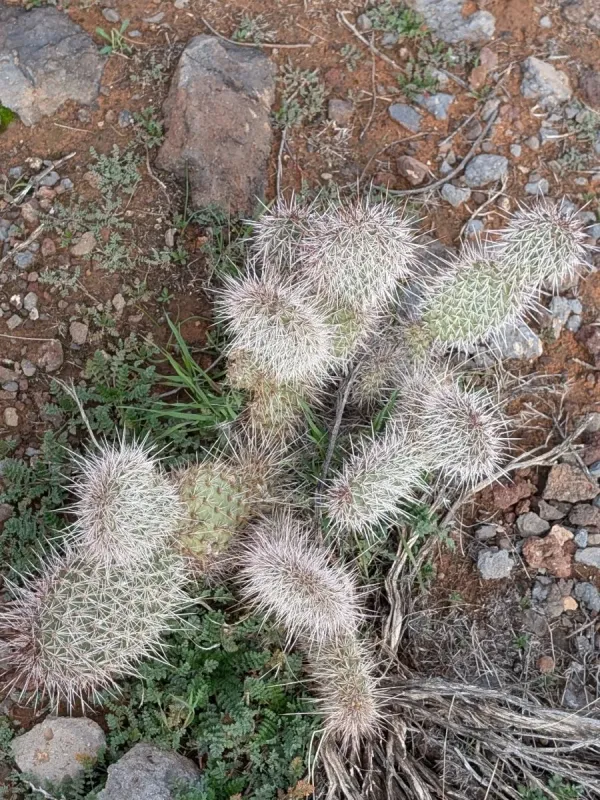
Description
Sowing dates
Opuntia erinacea belongs to the Cactaceae family. In agricultural and horticultural practices, the most common method of propagation is vegetative, utilizing individual stem segments.
The optimal time for planting cuttings is during the active growth season in late spring. Cuttings must be allowed to callous for several days to ensure successful rooting.
Seed propagation is possible but less common due to the slow growth rate of seedlings, which require controlled greenhouse conditions in their early stages.
The substrate must be highly porous and well-draining, typically consisting of a mix of sand, gravel, and organic matter to prevent water accumulation near the root zone.
Seedlings need to be sheltered from intense midday sun initially to promote healthy root development before being fully exposed to bright light.
Growing requirements
This species originates from arid regions of North America and is naturally adapted to harsh environments with minimal rainfall and poor-quality soil conditions.
The primary cultivation requirement is excellent drainage, as the species is highly susceptible to root rot if the substrate remains saturated with moisture for too long.
High levels of solar radiation are essential for the plant to maintain its structural integrity and develop the dense, characteristic spines for which it is known.
It requires a distinct seasonal cycle with high temperatures during the summer and a cool, dry period during the winter to trigger flowering and overall health.
This cactus is highly tolerant of significant diurnal temperature fluctuations, making it suitable for regions with clear weather and distinct temperature differences.
Main diseases and pests
Common pests include mealybugs and spider mites, which can thrive if the humidity remains low and the plant is stressed by improper environmental conditions.
Fungal pathogens such as Fusarium can cause severe damage in the form of soft rot if the plant is subjected to poor ventilation or excessive water intake.
Integrated pest management strategies involve the use of targeted insecticides and ensuring proper airflow to discourage the colonization of harmful organisms.
Preventive maintenance includes keeping the base of the plant free from debris and ensuring the soil surface dries completely between watering sessions.
Due to the sharp and numerous spines of Opuntia erinacea, specialized protective equipment is necessary when handling the plant to avoid physical injury.