
Opuntia curassavica
Opuntia curassavica
Description
Growing requirements
Opuntia curassavica, commonly known as the Curacao cactus, is a succulent species belonging to the Cactaceae family. It is native to the Caribbean islands, specifically the ABC islands, where it thrives in dry, rocky, and saline coastal habitats.
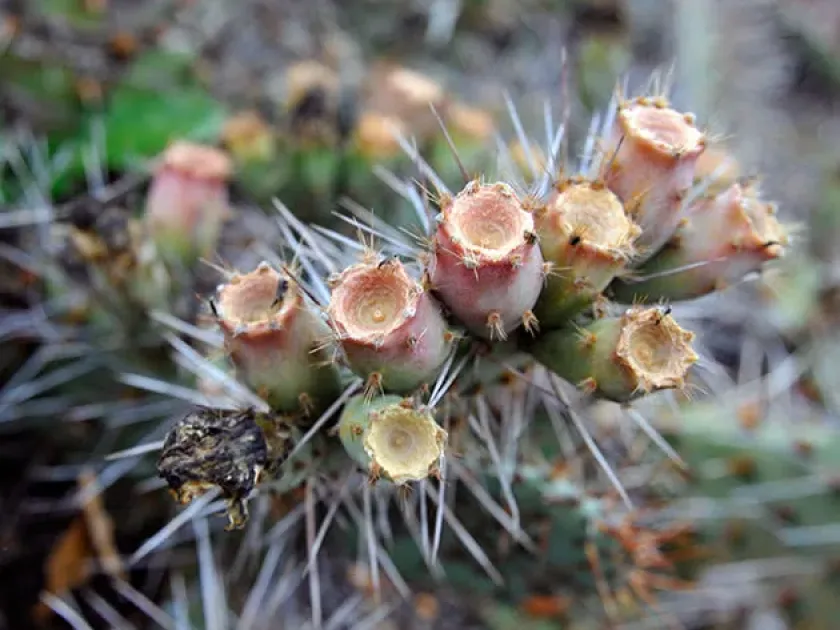
The plant is characterized by its fragile, cylindrical to slightly flattened joints. It is covered in numerous glochids — microscopic barbed bristles that detach easily upon contact, serving as a highly effective defense mechanism against herbivores.
In terms of agricultural and horticultural requirements, this species demands full sun exposure. Adequate light is critical for maintaining its compact, healthy growth pattern and promoting its characteristic vibrant green or brownish-green coloration.
The soil must be exceptionally well-drained, mirroring the loose, mineral-rich substrates of its native environment. A mixture of sand, perlite, and a small amount of fine gravel provides the necessary aeration to prevent root rot, which is the primary threat to its health.
This succulent is utilized primarily for rock garden landscaping and as a specimen plant in arid-themed botanical collections. Its ease of vegetative propagation through detached segments makes it a popular species among hobbyist collectors and landscape designers.
Main diseases and pests
Mealybugs are the most persistent pest for Opuntia curassavica. These insects aggregate in the crevices between segments, forming white, cotton-like masses that drain the plant's sap and stunt its growth.
Root rot, primarily caused by species of Phytophthora or Pythium, occurs when the substrate remains saturated for too long. This condition is often fatal, as the root system breaks down, leading to the collapse of the succulent stems.
Spider mites can infest the plant during hot and dry spells, particularly in enclosed greenhouse environments. Their presence is indicated by a dull, dusty appearance on the skin of the cactus and fine webbing between the joints.
Scale insects pose a threat by firmly attaching to the surface of the joints, creating hard bumps. If left untreated, they can cause significant tissue damage, leaving behind susceptible entry points for secondary bacterial infections.
Effective management requires a combination of cultural practices, such as maintaining proper ventilation, and the application of targeted acaricides or systemic insecticides when initial signs of infestation are detected.