
Opuntia crassa
Opuntia crassa
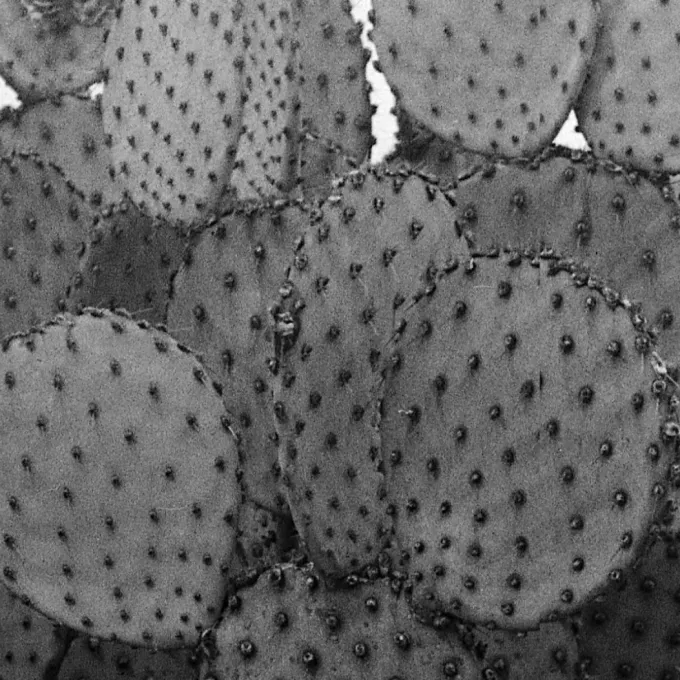
Description
Sowing dates
Opuntia crassa, a member of the Cactaceae family, is a drought-tolerant succulent adapted to arid and semi-arid environments. It propagates naturally through seeds, but agricultural production relies on vegetative propagation.
Vegetative propagation involves harvesting mature cladodes (segments), which are then dried for several days to callus the wound, preventing rot upon contact with soil.
Planting is typically performed during the start of the warm season when soil temperatures are consistently high, ensuring rapid root development and establishment.
For research or breeding purposes, seeds are sown in a controlled environment with temperatures between 25 and 30 degrees Celsius, requiring a sterile substrate.
Regardless of the method, selecting healthy, disease-free parent stock is the most critical factor for ensuring high-yielding and resilient plantations.
Growing requirements
This species requires full solar exposure to maintain its metabolic functions and structural integrity. Shaded environments inhibit growth and result in thin, brittle segments.
The soil must be well-drained and slightly alkaline, as the plant is highly sensitive to root asphyxiation caused by excessive water retention in heavy soils.
While known for its drought resistance, Opuntia crassa requires occasional supplemental irrigation during the growth phase to reach its full biomass potential.
The plant is intolerant to freezing temperatures. Ideal climatic conditions include warm, dry summers and mild winters, typical of subtropical and desert-adjacent regions.
Nutrient requirements are modest. Over-fertilization, especially with high-nitrogen compositions, can lead to succulent tissue softening and increased susceptibility to pests.
Yield
The yield of Opuntia crassa is measured by the biomass of cladodes or the production of fruits, depending on the specific agricultural goals of the plantation.
Effective management, including pruning to encourage branching, can lead to significant biomass outputs, making it a viable alternative fodder crop in arid zones.
Maturity and peak production are usually achieved after three to four years of growth, provided that the plants receive adequate space and minimal environmental stress.
Proper spacing between rows is essential for both plant health and the efficiency of harvesting operations, balancing the high density of plants with the need for airflow.
Systematic annual harvests are recommended to maintain the vigour of the plants and prevent the accumulation of older, woody segments that contribute less to productivity.
Main diseases and pests
Pests like the cochineal scale and spider mites are the primary threats, as they colonize the soft tissues of the segments and can quickly devastate a plantation.
Fungal infections, often caused by stagnant humidity and poor soil drainage, typically present as rot at the base of the cactus pads, which can spread rapidly.
Mechanical damage during weeding or pruning provides entry points for bacteria and fungi, making tool disinfection a standard practice for maintaining plantation health.
Early intervention is vital; regular monitoring of the underside of the cladodes can help identify pest infestations before they become unmanageable.
Avoiding overhead irrigation and ensuring proper drainage are the two most effective preventative measures against the majority of infectious diseases in this crop.
Harvesting
Harvesting Opuntia crassa requires specialized protective gear, such as thick gloves, to handle the segments safely due to the presence of small, sharp glochids.
Cladodes are harvested by making clean, sharp cuts at the base of the segment, ensuring the plant structure remains balanced to support future vegetative growth.
Post-harvest processing involves removing glochids from the skin of the segments or fruits, often using brushing machines or pressurized water jets for large quantities.
The product should be stored in cool, well-ventilated locations to minimize respiration rates and prevent spoilage prior to transport or processing.
Logistics for the harvested crop must prioritize ventilation; bulk storage in airtight containers can lead to rapid decay of the highly succulent plant material.