
Opuntia chlorotica
Opuntia chlorotica
Description
Growing requirements
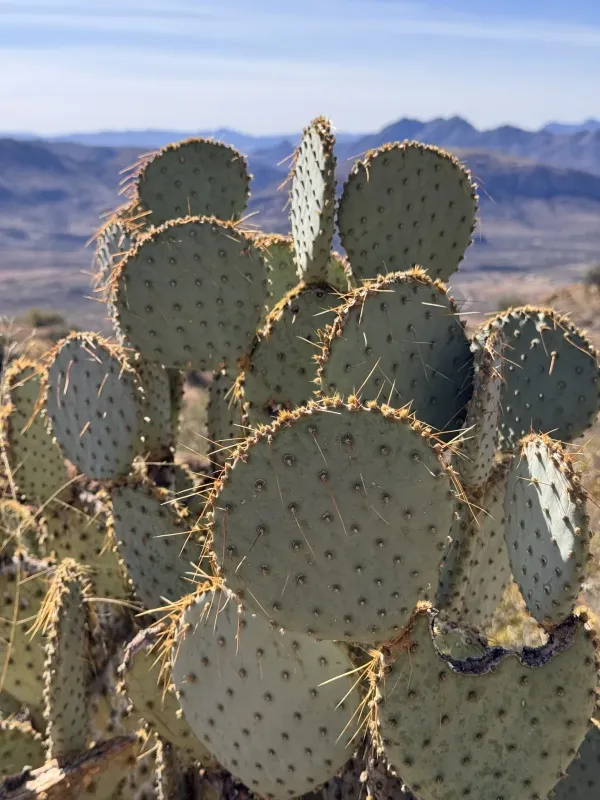
Opuntia chlorotica, commonly known as the pancake prickly pear, is a distinctive shrub-like cactus belonging to the Cactaceae family. Native to the arid southwestern United States and northern Mexico, it is recognized for its tree-like habit and flattened, pale-green cladodes that can reach heights of up to two meters.
The plant thrives in well-draining, coarse-textured soils, including sand and rocky substrates. It is exceptionally adapted to arid conditions and requires soil with excellent aeration to prevent root asphyxiation, which is a common cause of plant failure in non-native cultivation environments.
Optimal growth depends on high solar irradiance and significant diurnal temperature variation. While Opuntia chlorotica can tolerate occasional frost, it is primarily a desert plant that requires a long, hot growing season to develop its characteristic structure and reproductive organs.
Agricultural management is relatively simple due to the plant's hardy nature. Propagation is primarily achieved through stem cuttings; it is essential to allow the cut ends of the pads to callus for several days before planting to ensure successful rooting and avoid fungal infections.
The species has diverse agricultural potential, ranging from land restoration in arid regions to its use as emergency livestock fodder. Furthermore, the fleshy pads and edible fruits have niche applications in health food industries due to their high nutritional content and water-retention properties.
Main diseases and pests
Fungal root rots remain the primary threat to Opuntia chlorotica, particularly when soil drainage is compromised. Symptoms often include yellowing of the pads and soft rot at the base, which can lead to the rapid collapse of the entire structure if left untreated.
Pests such as cochineal scale insects, mealybugs, and spider mites frequently colonize these cacti. These insects feed on the plant sap, causing unsightly spotting, deformation of growth, and general physiological decline of the plant.
Maintaining adequate spacing between individuals is the most effective cultural practice for disease control. Good airflow helps reduce ambient humidity levels around the pads, making the environment less conducive to fungal spore germination and pathogen development.
Integrated pest management strategies should prioritize mechanical removal or the application of insecticidal soaps where feasible. When chemical interventions are necessary, they must be selected with caution to avoid adverse impacts on the plant's health and potential harvest safety.
Regular field scouting is critical for identifying early-stage infestations. Inspecting the undersides of the pads and the junctions between segments is the best way to monitor for pest activity and ensure timely intervention before the spread becomes unmanageable.