
Noccaea sylvia
Noccaea sylvia
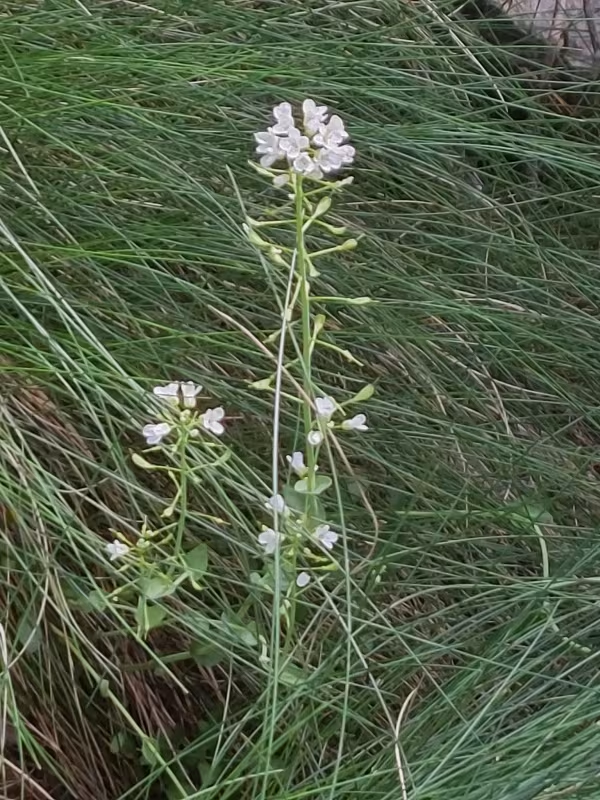
Description
Growing requirements
Noccaea sylvia is a herbaceous plant belonging to the Brassicaceae family. Increasingly recognized as a potential industrial crop, it is valued for its hardiness and the specific chemical composition of its seeds, which are suitable for various processing applications.
The native range of this species is spread across Europe and Western Asia, primarily in forested and meadow environments. Its high resilience to low temperatures makes it an excellent candidate for cultivation in temperate climates where other oilseed crops might struggle to survive winter.
Cultivation requires soils with good drainage, such as sandy loams or loams, to prevent root rot. The crop exhibits a moderate tolerance to soil pH levels but performs best in slightly alkaline to neutral conditions, requiring minimal chemical input to establish a healthy stand.
Botanically, it features a distinct basal rosette of leaves and produces small, silicle-type fruits. The plant is efficient at utilizing spring moisture, which contributes to its successful establishment during early growth phases when competition from weeds is often high.
The primary agricultural interest lies in the oil yield extracted from the seeds. Recent research highlights the potential of Noccaea oils as a renewable feedstock for biodiesel production and fine chemical industries, positioning it as a strategic crop for sustainable agricultural development.
Main diseases and pests
Noccaea sylvia is susceptible to several pathogens common among the Brassicaceae family, with clubroot (Plasmodiophora brassicae) being a significant threat, especially in fields with suboptimal pH levels. This soil-borne pathogen significantly inhibits root development and nutrient uptake.
Downy mildew is another common disease that impacts the crop during periods of prolonged leaf wetness. Symptoms include yellowish spots on the upper leaf surface and fungal growth on the underside, leading to premature leaf senescence and reduced overall yields.
Flea beetles are among the most problematic insect pests for this culture, particularly in the seedling stage. These insects feed on the leaves, creating small shotholes that can stunt the plant growth or, if infestation is severe, cause complete loss of the stand.
The rapeseed blossom beetle presents a risk during the reproductive phase, as it feeds on the floral parts before they open. This damage directly reduces the number of pods produced per plant, leading to substantial yield losses in unprotected or inadequately managed fields.
Furthermore, aphid infestations can cause both physical damage through sap extraction and systemic issues due to the transmission of viruses. Integrated pest management strategies are essential to maintain plant health and ensure the long-term viability of the cultivation cycle.