
Daisy-leaved Noccaea
Noccaea bellidifolia
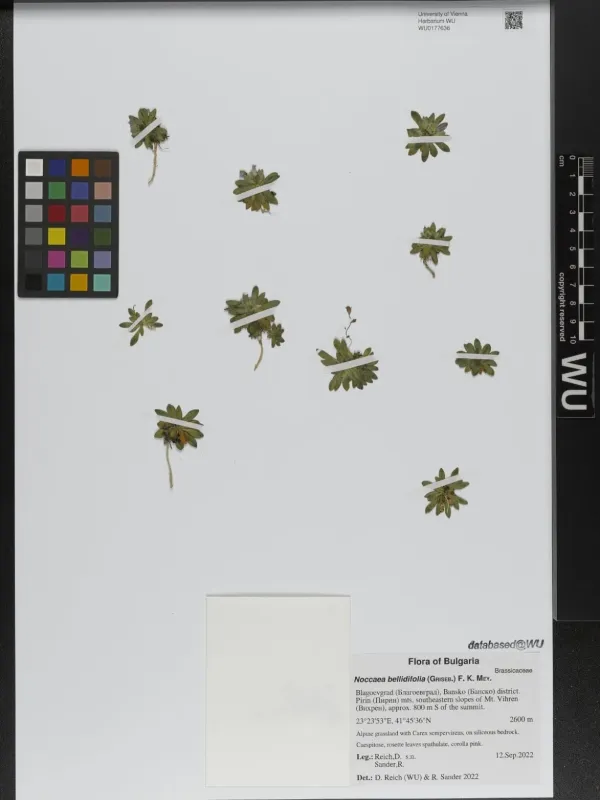
Description
Growing requirements
Daisy-leaved Noccaea (Noccaea bellidifolia) is a perennial herbaceous plant belonging to the Brassicaceae family. It is naturally adapted to high-altitude alpine environments, thriving in rocky and nutrient-poor mountain soils.
The plant is recognized by its compact, daisy-like basal leaves and short, dense racemes of small white flowers. This growth habit allows it to withstand extreme winds and cold temperatures characteristic of its native habitat.
Successful cultivation requires soil with excellent drainage, as the plant is highly susceptible to root rot in waterlogged conditions. A neutral to alkaline pH is preferred, mimicking the limestone terrains of its origin.
In terms of climatic requirements, it demands cool summers and cold winters. Excessive heat and humidity during the growing season often act as limiting factors for its development in lower-elevation regions.
Its primary agricultural role is currently centered on ornamental horticulture and botanical research, as its genetic diversity offers insights into the cold-hardiness of the Brassicaceae family.
Main diseases and pests
Fungal pathogens are the most significant threat, particularly those that manifest as leaf spots or root rot when aeration is insufficient.
Pests such as crucifer flea beetles are common attackers, feeding on the foliage and potentially reducing the plant's aesthetic and physiological vigor.
Maintaining a clean growing environment and providing adequate spacing between plants are essential to mitigate the spread of soil-borne pathogens.
Effective management involves consistent monitoring for early signs of infestation and ensuring that drainage systems are fully functional throughout the year.
Due to its alpine nature, the plant exhibits limited resistance to competition from fast-growing weeds, which must be manually removed to prevent nutrient depletion.