
Onion-leaved Noccaea
Noccaea cepaeifolia
Description
Growing requirements
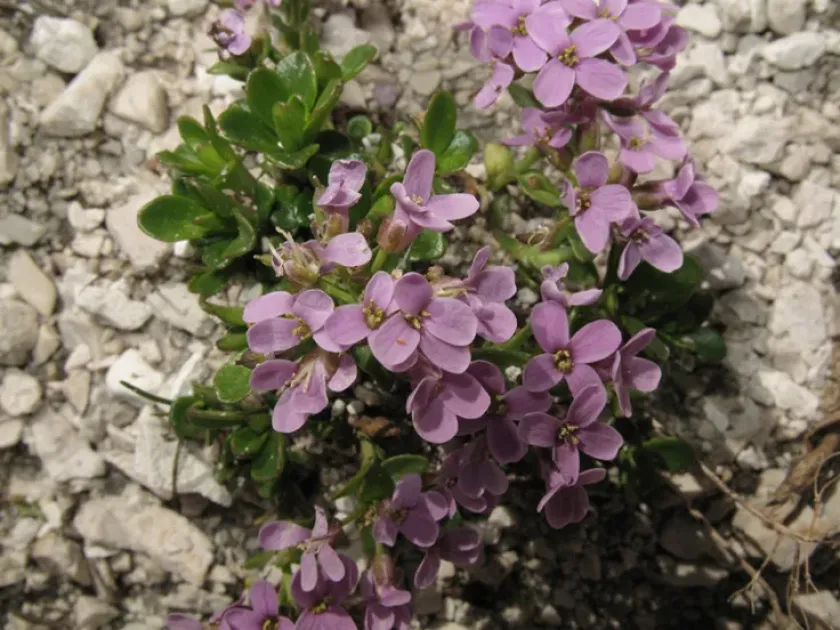
Onion-leaved Noccaea (Noccaea cepaeifolia) is a perennial herbaceous plant belonging to the Brassicaceae family. It is natively distributed across alpine environments, specifically thriving on limestone slopes where few other plant species can compete for resources.
The botanical profile of the plant is defined by its fleshy, onion-like leaves arranged in a tight basal rosette. This specific adaptation allows the plant to conserve moisture in high-altitude environments characterized by intense solar radiation and thin, well-draining soil layers.
Cultivation requirements necessitate high-quality drainage as a priority, as the species is highly susceptible to root rot if soil moisture is excessive. The ideal substrate is a mineral-rich, slightly alkaline mix, often mimicked in gardens using a combination of gravel, grit, and sandy loam.
Environmental conditions for optimal growth include full sun exposure and cool, well-ventilated locations. The plant is extremely hardy and capable of surviving sub-zero winter temperatures, provided that the growing season is not plagued by prolonged extreme heat or high humidity.
Crop management focuses on maintaining a clean environment free from aggressive weeds, as Noccaea species are relatively slow-growing. Monitoring for signs of nutrient deficiency is secondary to ensuring structural soil integrity, as the plant is naturally adapted to survive in nutrient-poor alpine substrates.