
Mountain pennycress
Noccaea montana
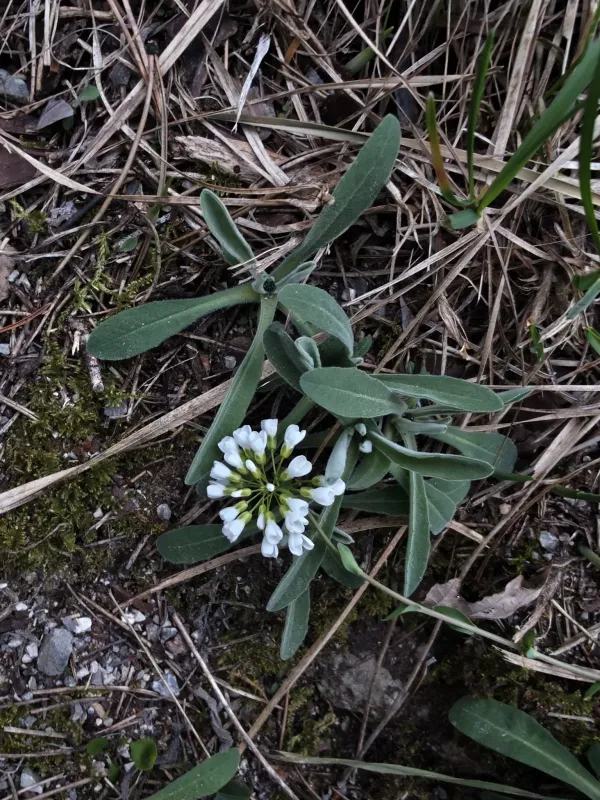
Description
Sowing dates
Mountain pennycress (Noccaea montana) is a perennial herbaceous plant belonging to the Brassicaceae family. Naturally occurring in mountainous terrains, this species has evolved to thrive in rocky, well-drained soils, showing a remarkable ability to adapt to diverse climatic conditions.
Sowing is typically scheduled for early spring or late autumn, as the seeds benefit significantly from a period of cold stratification. This process breaks dormancy and ensures uniform germination, which is critical for establishing a consistent plant density across the field.
The seeds should be sown at a shallow depth of approximately 0.5 cm, as light exposure is necessary for successful emergence. Using a high-quality, loose soil medium is recommended to prevent seedling rot and to facilitate the development of the delicate root system during the initial growth phase.
In a farming context, row spacing should be maintained at about 25–30 cm to allow for proper air circulation and to minimize competition for sunlight. While growth is initially slow, once established, the plants form a sturdy rosette that effectively competes with minor weed pressure.
Proper field preparation involves clearing perennial weeds before sowing, as the crop's slow initial development makes it vulnerable to early competition. Ensuring a clean seedbed is one of the most effective agronomic practices for successful cultivation.
Growing requirements
Mountain pennycress thrives in calcium-rich, alkaline to neutral soils, mirroring the limestone-based habitats of its native alpine environment. It is imperative to avoid waterlogged conditions, as the species is highly susceptible to root decay when moisture levels are stagnant.
This plant is a sun-loving species that requires full exposure to flourish and maintain its structural integrity. While it can tolerate cool temperatures, prolonged periods of high humidity combined with stagnant air can lead to physiological stress and reduced secondary metabolite production.
Fertilization should be managed based on regular soil testing, with a focus on phosphorus and potassium to strengthen cell walls. Avoiding excessive nitrogen application is crucial, as it leads to rank growth and makes the plants more prone to lodging and fungal infections.
Water management is focused on providing consistent moisture without saturation. Drip irrigation systems are often preferred in controlled agricultural settings to precisely deliver water to the root zone while keeping foliage dry, thus preventing disease outbreaks.
The plants are exceptionally hardy against cold, making them suitable for cultivation in regions with harsh winters. However, providing a light organic mulch cover can help stabilize soil temperatures during freeze-thaw cycles, protecting the root system from damage.
Main diseases and pests
The primary threats to Noccaea montana are diseases associated with the Brassicaceae family, particularly those favored by damp conditions. Downy mildew and various leaf spot diseases can severely impact foliage quality if moisture levels are not carefully managed.
Cruciferous flea beetles represent the most significant insect threat, often causing damage to the developing leaves of young seedlings. Integrated pest management, including the use of trap crops and biological controls, is essential for maintaining crop health without relying on excessive chemicals.
Root-rot pathogens, such as Phytophthora or Pythium, thrive in poorly drained soils and can cause sudden plant mortality. Ensuring proper soil drainage and strictly adhering to crop rotation schedules are the most effective ways to mitigate these risks.
Slugs and snails can also pose a risk to young plantings, especially in environments where moisture is high. Monitoring the field and implementing barrier methods during the early growth stages can significantly reduce losses due to these pests.
Effective disease prevention relies heavily on crop rotation, avoiding fields previously used for other Brassica crops for at least four years. This strategy helps break the lifecycle of soil-borne pathogens and minimizes the spread of persistent plant diseases.