
Noccaea macrantha
Noccaea macrantha
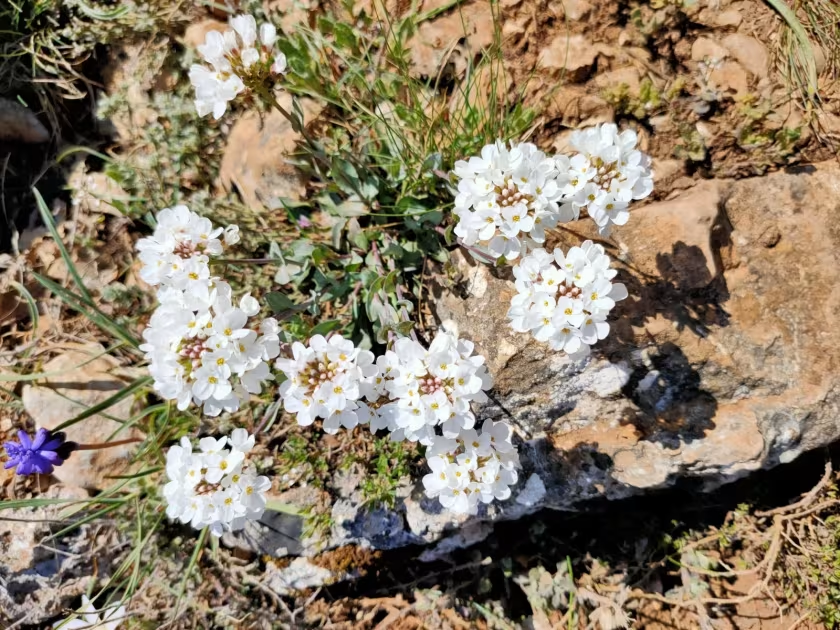
Description
Sowing dates
Noccaea macrantha belongs to the Brassicaceae family. In agronomic practice, seeding is typically carried out in early spring, as soon as the soil warms up to a range of 5–7 degrees Celsius.
The crop is characterized by high cold resistance, making it suitable for regions with temperate climates. Winter sowing allows the seeds to undergo natural stratification, ensuring more uniform germination in the spring.
The seeding rate depends on soil fertility and the intended use of the crop, averaging between 6 and 10 kg per hectare. The sowing depth should generally not exceed 1–2 cm due to low energy of germination at greater depths.
High-quality sowing requires preparing a fine-crumbled soil structure to ensure maximum contact between seeds and the moist substrate. Seedlings typically emerge 10–14 days after planting under optimal moisture levels.
The optimal sowing pattern involves a row method with 15 cm spacing, allowing the plant to distribute nutrients and light exposure evenly during the early stages of vegetative development.
Growing requirements
Noccaea macrantha prefers well-drained, loamy, or sandy soils with a neutral or slightly alkaline pH. The crop is highly sensitive to water stagnation, making the selection of elevated field plots a priority.
The plant is photophilous; therefore, cultivation in shaded conditions significantly reduces the accumulation of secondary metabolites and total biomass. Intensive lighting is a critical factor for rosette leaf development.
The crop is undemanding regarding temperature regimes, though 18–22 degrees Celsius is considered optimal during the flowering phase. Sudden temperature fluctuations during budding can lead to loss of reproductive organs.
Providing nitrogen fertilizers at the start of vegetation promotes rapid vegetative mass accumulation. However, an excess of nitrogen during the flowering phase can negatively affect the quality of the seed material.
Successful cultivation requires timely weed control during the first 30 days post-emergence, as young plants have a slow growth rate and limited competitive ability against invasive flora.
Yield
The yield of Noccaea macrantha depends on seasonal climatic conditions and the overall agronomic background. On average, the seed output per hectare varies from 0.8 to 1.5 tons under favorable growth conditions.
The biological potential of the crop involves the accumulation of significant amounts of fatty oils, which are highly valued in the pharmaceutical and technical industries. Oil content in seeds can reach 30–35%.
To increase yields, foliar feeding with micronutrients such as boron and molybdenum is recommended, as these are critical for normal pod setting in members of the Brassicaceae family.
Maintaining moisture levels during the flowering-to-fruiting phase is essential, as water deficits during this period lead to massive shedding of ovaries and a significant reduction in harvest volumes.
Large-scale production of the crop requires mechanization of the harvesting process, given the tendency of some varieties toward uneven seed ripening within a single inflorescence.
Main diseases and pests
Like many cruciferous plants, Noccaea macrantha is susceptible to pests typical of this family. The most dangerous are flea beetles, which can destroy young seedlings within a matter of days.
Common diseases include downy mildew and alternaria, especially during periods of high air humidity. These pathogens attack the leaf apparatus, reducing the photosynthetic activity of the plants.
Pest control involves the use of systemic insecticides during early development stages, while avoiding treatments during the flowering period to protect honeybee and bumblebee populations.
Crop rotation is the main preventive tool; it is not recommended to sow Noccaea after other Brassicaceae crops more than once every 4–5 years to avoid the accumulation of specific soil-borne infections.
To prevent fungal disease outbreaks, it is necessary to maintain spatial isolation from wild relatives, which can serve as reservoirs for viral and fungal infections in field conditions.
Harvesting
Harvesting is performed during the wax ripeness phase of the seeds when the pods acquire a characteristic straw color. It is important to avoid over-ripening, as pod shattering leads to significant seed loss.
A swathing method is primarily used, where plants are mowed into windrows to undergo ripening for 3–5 days. This process helps lower seed moisture to a critical level before threshing.
Direct combining is only possible with uniform crop maturation. In this case, the combine drum speed must be carefully adjusted to prevent crushing the small seeds of the crop.
After threshing, the seed bulk requires immediate cleaning and drying. Seeds are characterized by high moisture content, so storage without proper processing leads to self-heating and loss of quality.
Final seed moisture for storage should not exceed 9–10%. Storage must be conducted in dry, cool facilities with good ventilation to preserve the biological value of the oil.