
Kovats' pennycress
Noccaea kovatsii
Description
Sowing dates
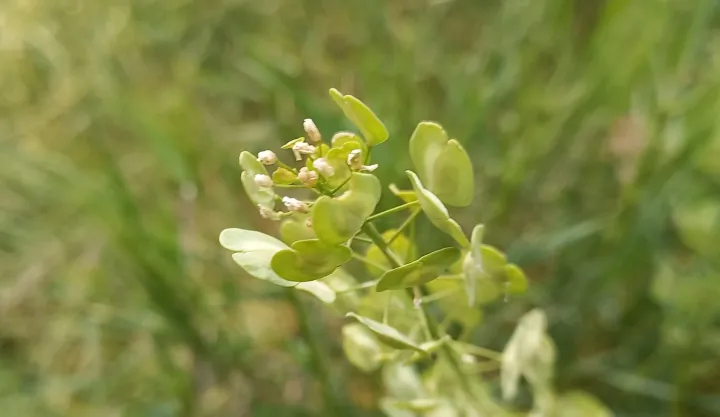
Kovats' pennycress belongs to the Brassicaceae family. It is an herbaceous plant that demonstrates characteristics of either a winter or spring crop depending on the region and planting dates.
Sowing is carried out in early spring as soon as the soil reaches physical maturity, allowing the plant to effectively utilize moisture reserves for seed germination.
For winter crops, the optimal time is late summer or early autumn, ensuring the plants form a rosette of leaves before the onset of persistent frosts.
Seeding rates should be calculated based on the purity and germination capacity of the seed material, typically ranging from 8–12 kg per hectare using row seeding methods.
Seed planting depth is a critical factor and should not exceed 1–2 centimeters, as the seeds have a relatively small reserve of nutrients for emergence.
Growing requirements
The crop prefers open areas with good sunlight exposure, as it is sensitive to shading, which negatively impacts growth rates and overall development.
The plant is moderately demanding regarding soil conditions, but shows the best productivity on structural loams with a neutral or slightly alkaline pH level.
Kovats' pennycress is characterized by high winter hardiness and the ability to withstand short-term spring cold spells, making it suitable for regions with harsh climates.
An important requirement is the absence of waterlogging and a deep groundwater table, as stagnant water leads to rapid root system decay.
The optimal temperature range for the active vegetation period varies between 15–22 degrees Celsius, while the plant remains capable of enduring dry periods.
Yield
The yield of Kovats' pennycress depends directly on the level of agricultural management, nutrient supply, and strict adherence to harvesting timelines.
Under intensive cultivation technologies, average seed yield ranges from 1.5–2.5 tons per hectare, which is comparable to several other small-seeded crops.
The oil content of these seeds is of high interest for the processing industry, as it allows for the production of high-quality vegetable oils.
To increase output, it is recommended to apply nitrogen fertilizers during the active stem elongation phase and the formation of reproductive organs.
A biological feature of this plant is the uniform maturation of seeds within the pods, which helps to minimize losses if harvest regulations are followed.
Main diseases and pests
The greatest threat to crops is the crucifer flea beetle, which can damage young seedlings during the period when the first true leaves emerge.
Under high humidity and dense planting conditions, fungal diseases such as Alternaria leaf spot may develop, damaging both leaves and seed pods.
To control pests and diseases, preventive agricultural methods are applied: crop rotation and spatial isolation from other Brassicaceae species.
Chemical protection should be performed only in extreme cases when economic thresholds are exceeded, using approved insecticides and fungicides.
It is essential to monitor weed development, which can suppress the pennycress during the initial growth stages by competing for nutrients and soil moisture.
Harvesting
Harvesting begins upon full maturity when the pods acquire a characteristic straw color and seed moisture content decreases to 12–14 percent.
The optimal harvesting method is direct combining, which reduces the time the crop stays in the field and minimizes losses from seed shattering.
Adjustment of the combine's threshing mechanism is crucial to ensure gentle processing, preventing mechanical damage to the fine seed material.
After harvesting, seeds must be cleaned of impurities and dried at stationary facilities to reach standard moisture content for long-term storage.
Storage should take place in dry, well-ventilated facilities or grain elevators, maintaining a temperature regime that eliminates the risk of self-heating.