
Fendler's pennycress
Noccaea fendleri
Description
Growing requirements
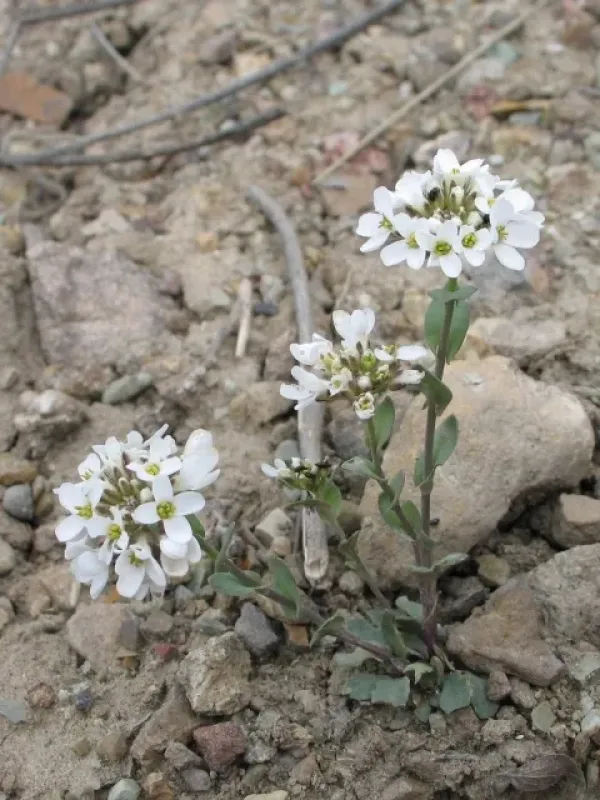
Fendler's pennycress (Noccaea fendleri) is a perennial herbaceous plant belonging to the Brassicaceae family. Native to the mountainous regions of North America, it has developed significant resilience to variable environmental conditions and cold climates.
The plant features a basal rosette of leaves and produces slender flowering stems in the spring. Botanically, it is recognized for its ability to thrive in rocky, well-drained soils, often colonizing areas where other plants struggle to establish themselves.
Cultivation requirements include well-aerated soil with a neutral to slightly alkaline pH. The plant performs best in open sites with full sun exposure, although it can tolerate partial shade in hotter regions to prevent heat stress.
Agricultural management should prioritize soil structure maintenance to avoid waterlogging. During the growing season, irrigation should be carefully controlled to match the natural moisture requirements, avoiding stagnant water in the root zone.
The economic potential of this species is currently being studied in the context of sustainable agriculture. Its hardiness and biological traits make it a candidate for research in developing more robust crop varieties within the mustard family.
Main diseases and pests
Common diseases affecting this crop include clubroot, a severe soil-borne disease typical for the Brassicaceae family. Crop rotation is the primary management tool to prevent the accumulation of spores in the field.
Crucifer flea beetles are the most significant insect threat, particularly during the seedling stage. These pests can rapidly defoliate plants, requiring immediate intervention if pest populations reach critical levels.
Downy mildew and other fungal pathogens can develop under high humidity conditions, causing leaf yellowing and necrosis. Improving air circulation by adjusting planting density is a recommended preventative measure.
Aphids can colonize the inflorescences, causing stunted growth and poor seed set. Scouting for these insects should be intensive during the reproductive phase of the plant cycle.
Weed management is critical during the establishment period. Since the plant starts its growth slowly, physical or chemical weed control measures are necessary to ensure the crop has access to essential nutrients and light.