
Nierembergia linariifolia
Nierembergia linariifolia
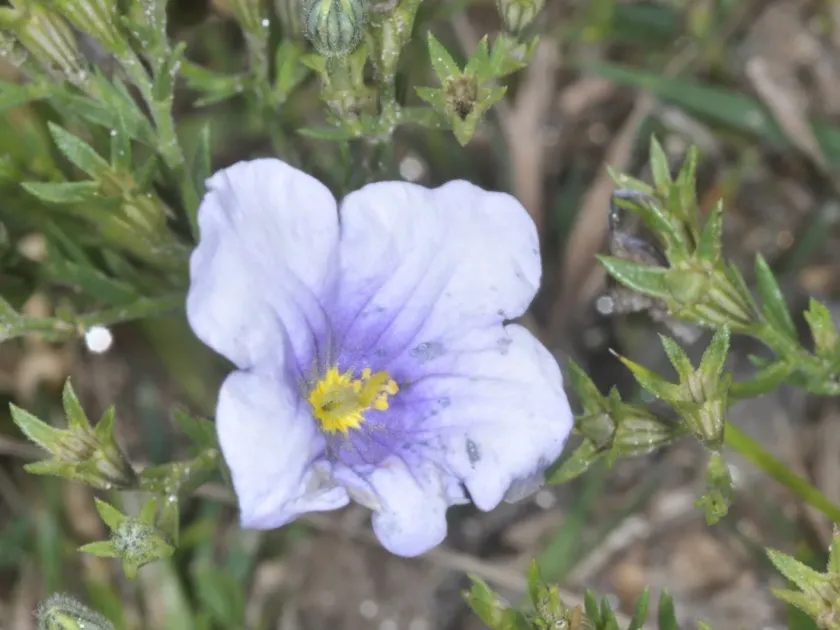
Description
Sowing dates
Nierembergia linariifolia belongs to the Solanaceae family and is an elegant perennial subshrub. In temperate climates, seeds are sown in late February or early March to ensure strong plants by the start of the summer season.
The seeds of the plant are very small, so they are not buried in the soil but distributed over the surface of a nutrient-rich substrate, lightly pressed, and moistened with a spray bottle. Containers are covered with film or glass until germination.
Seedlings are pricked out when two true leaves form into individual pots or trays. This allows the root system to adapt better before transplanting into open ground.
Transplanting seedlings to their permanent location is carried out only after the threat of frost has passed. For Nierembergia, a consistently warm soil temperature is critical to avoid the risk of freezing young shoots.
For vegetative propagation, cuttings are used, usually taken in late summer. The cuttings are rooted in a sand-peat mixture under conditions of high air humidity and moderate lighting.
Growing requirements
The plant originates from South America and has high demands for sunlight. For full flowering and the formation of a dense mound, it is necessary to choose open, well-lit areas without water stagnation.
The soil should be light, well-drained, and moderately fertile. Nierembergia linariifolia is extremely sensitive to excessive moisture in the root system; therefore, heavy clay substrates require the addition of aerators like sand or perlite.
The optimal pH level for this crop ranges from slightly acidic to neutral. In excessively alkaline soils, the plant may exhibit signs of chlorosis, which slows down growth and reduces decorative quality.
The crop has moderate drought tolerance; however, during the active growing season, it requires regular watering. The drying out of the soil ball in container culture leads to a rapid loss of turgor and the dropping of flower buds.
In regions with harsh winters, Nierembergia is grown as an annual or moved into conservatories. The plant can withstand slight temperature drops but dies if the ground freezes deeply.
Main diseases and pests
The main threat to the health of Nierembergia is root rot caused by waterlogged soil. If water stagnates, pathogenic fungi quickly attack the root collar, leading to the death of the entire bush.
Under greenhouse conditions or high humidity, the plant can be infested by aphids. These pests gather on the tips of shoots, sucking juices and deforming young leaves and buds.
Spider mites pose a danger during dry and hot periods. Signs of infestation include fine webbing on the undersides of leaves and the appearance of tiny light spots, eventually leading to the wilting of the leaf blade.
To prevent fungal diseases, it is important to follow a strict watering schedule and ensure good air circulation between plants. Dense plantings promote moisture accumulation and the development of powdery mildew.
If pests are detected, treatment with specialized insecticides or acaricides should be carried out. It is important to perform preventive spraying before the onset of mass flowering to avoid toxin accumulation in the flowers.