
Nierembergia frutescens
Nierembergia frutescens
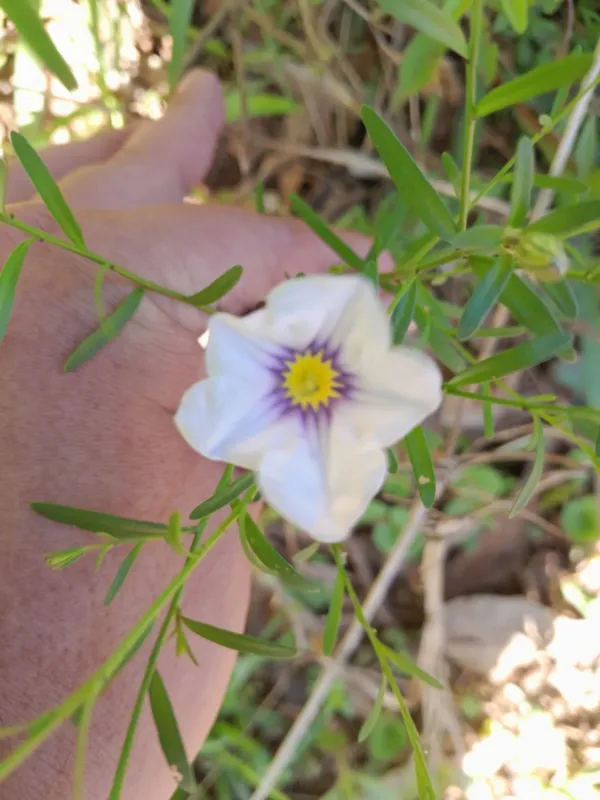
Description
Sowing dates
Nierembergia frutescens, commonly known as a type of cup flower, is a perennial plant within the Solanaceae family. Originating from South America, it is widely appreciated in landscaping for its prolific blooming habit and delicate foliage.
The propagation process starts with sowing seeds in late winter or early spring using well-draining seed-starting mix. The seeds are minuscule and require surface sowing, barely covered by a fine layer of vermiculite to receive the necessary light for germination.
Maintaining a consistent environment is crucial during the early stages of development. A temperature range between 20°C and 22°C, combined with high humidity, ensures a successful emergence rate within a few weeks.
Seedlings should be transplanted into individual pots once they develop their first set of true leaves. This allows the root system to establish thoroughly, preparing the plant for the eventual move to a permanent location.
Hardening off the plants is a vital step before outdoor planting. Once the danger of frost has passed, they should be gradually exposed to outdoor conditions over the course of a week to prevent transplant shock.
Growing requirements
Nierembergia frutescens thrives in full sun, which is essential for maximizing flower production. If planted in partial shade, the plant tends to become leggy and produce significantly fewer blooms.
Soil quality must be prioritised; the plant demands excellent drainage to prevent root rot. A nutrient-rich, slightly acidic to neutral loam provides the best growing medium for long-term health and vigour.
Watering requirements are moderate but steady. The soil should remain consistently moist during the active growing season, yet it must never be waterlogged, as the roots are highly sensitive to stagnant moisture.
Fertiliser application helps sustain continuous flowering throughout the summer. Using a balanced, water-soluble fertiliser every two to three weeks will provide the necessary nutrients for dense foliage and abundant buds.
While the plant is technically a perennial, its frost sensitivity means it is frequently grown as an annual in cooler climates. If winters are severe, containers can be moved indoors to a bright, cool location.
Main diseases and pests
Pest management is an important aspect of Nierembergia care. Aphids and whiteflies are common visitors that cluster on the undersides of leaves, causing sap depletion and potential viral transmission.
Fungal diseases, particularly root rots, are often a direct result of overwatering or compacted soil. Once the root system is compromised, the foliage will show yellowing and wilting, which is often difficult to reverse.
Powdery mildew is a common concern during humid, stagnant periods. Ensuring adequate spacing between plants allows for proper airflow, significantly reducing the risk of this fungal outbreak.
Spider mites can also be problematic during prolonged hot and dry spells. Their presence is usually indicated by fine webbing and stippling on the leaves, which can be mitigated with regular misting or insecticidal soap.
- Proper drainage implementation.
- Regular monitoring for early pest detection.
- Sanitation practices in the garden beds.