
Nerine hybrids
Nerine hybrids
Description
Sowing dates
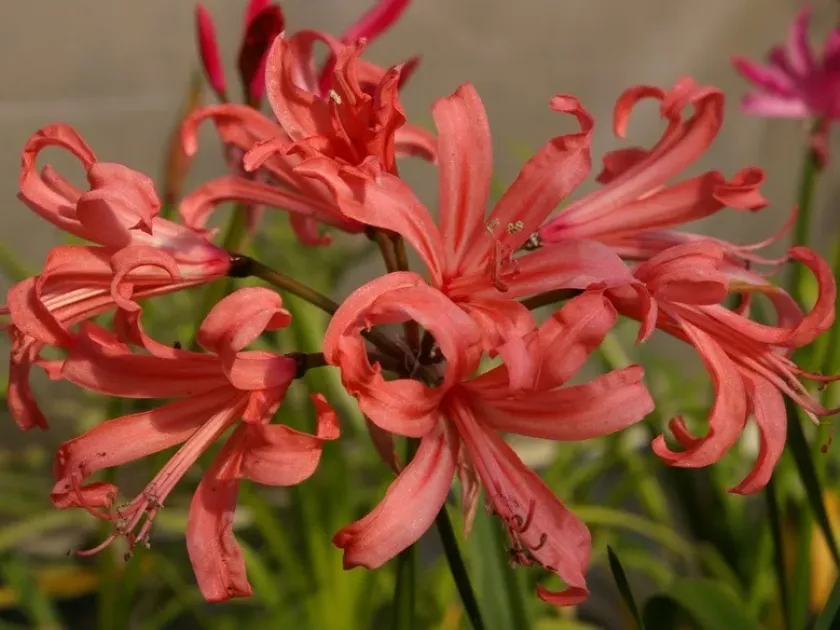
Nerine hybrids are bulbous perennial plants belonging to the Amaryllidaceae family. These flowers are highly valued for their late-season blooms that provide color when many other garden plants have finished their cycle.
The primary method of propagation is the division of bulb offsets, which should be performed during the plant's dormant period. Careful handling of the roots is necessary to ensure the plant establishes quickly in the new season.
When planting, the bulb neck must remain above the soil level to prevent moisture-induced decay. Proper planting depth is crucial for both the survival of the bulb and the stimulation of future flower stalks.
Plants thrive best in pots where the bulbs are relatively crowded. This restricted space encourages the plant to allocate energy towards blooming rather than excessive leaf development or vegetative multiplication.
Once planted, provide moderate hydration to initiate growth. Maintain a consistent environment to help the bulbs stabilize their root system before the onset of the active growing season.
Growing requirements
Nerine hybrids require specific conditions to flourish, primarily focusing on light and temperature balance. They perform best in locations with high light intensity but protected from intense, direct heat.
The soil substrate must be gritty and well-draining, mimicking the plant's natural habitat. A mix including organic matter, perlite, and coarse sand provides the necessary structure and aeration for healthy bulb development.
Temperature management is critical: warm temperatures are needed for growth, while a cooler, dry rest period is essential to trigger blooming. A winter storage temperature around 10–12 degrees Celsius is usually sufficient.
Watering should be managed based on the plant's life cycle. During the growing season, keep the soil moist but never saturated. Once the foliage begins to yellow, gradually reduce watering until the plant enters full dormancy.
Fertilization with a potassium-rich solution during the active growth stage improves bulb health and ensures strong, vibrant flower stalks when the blooming season arrives.
Main diseases and pests
The main threats to Nerine hybrids are fungal infections such as botrytis and bulb rot, which are often caused by poor drainage or excessive humidity. Ensuring adequate airflow is the best preventative measure.
Pests like spider mites and mealybugs can infest the foliage, particularly in indoor environments with low humidity. Regular monitoring and prompt intervention with insecticidal soaps or oils are recommended.
Bulb mites can also cause significant damage by feeding on the bulb tissue. Prophylactic treatment of bulbs with fungicide before planting can help prevent the introduction of these pathogens into the growing medium.
If symptoms of decay appear, it is essential to remove the affected part immediately and improve the drainage conditions. Sterilizing tools between plants is a standard practice to prevent the spread of infections.
Proper sanitation, including the removal of dead or rotting plant matter, keeps the growing area clean and reduces the risk of long-term infestation or disease transmission.