
Mutisia decurrens
Mutisia decurrens
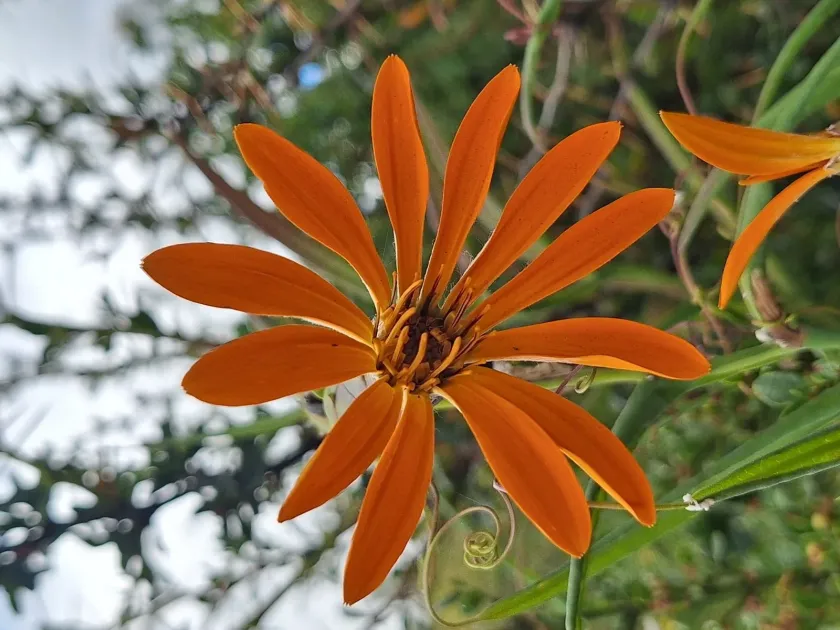
Description
Growing requirements
Mutisia decurrens is a remarkable perennial climbing plant belonging to the Asteraceae family. Originating from the mountainous regions of Chile and Argentina, it is highly valued for its striking, large orange flower heads that resemble daisies and its unique leaf structure with tendrils.
The plant thrives in regions that mimic its natural alpine environment, requiring cool nights and temperate days. In cultivation, it is often treated as a specialty ornamental, demanding specific attention to its vertical growth habits, typically requiring sturdy trellises or supports to climb effectively.
Regarding soil requirements, Mutisia decurrens demands a well-draining, nutrient-rich substrate. A slightly acidic to neutral pH is preferred. Poor drainage is the most significant deterrent to the plant's health, as waterlogged soil leads to rapid root system decline and eventual mortality.
Climatically, it prefers bright, indirect sunlight, especially in warmer climates where the intense afternoon sun can scorch its leaves. Adequate air circulation is crucial to maintain plant vigor, as it is naturally accustomed to the breezy slopes of the Andes mountains where fresh air is constant.
During the growing season, moderate and consistent moisture is required, but the top layer of the soil should be allowed to dry out slightly before the next watering. Fertilization with a balanced liquid fertilizer during the active blooming phase supports its intensive flowering cycle and strong vegetative growth.
Main diseases and pests
The most significant pathological threats to Mutisia decurrens are soil-borne fungal pathogens. Species like Phytophthora or Pythium can cause severe root rot, which is often irreversible once symptoms manifest in the foliage, making proactive soil management essential for the plant's longevity.
Pest pressure is primarily driven by spider mites, particularly when the ambient humidity is low. These mites congregate on the underside of leaves and can rapidly weaken the plant by extracting essential cellular sap, leading to chlorosis and potential leaf abscission.
Aphids can also pose a recurring issue, as they tend to colonize the tender tips of new stems and developing flower buds. Infestations lead to stunted growth and deformities in the flowers, necessitating targeted insecticidal soap applications or biological controls if the population exceeds threshold levels.
Foliar diseases, such as powdery mildew, may emerge in environments with stagnant air and high humidity levels. Ensuring adequate spacing between plants and maximizing airflow around the foliage are primary cultural practices to minimize the occurrence of these fungal outbreaks throughout the season.
Effective pest and disease management for this species relies on an integrated approach: providing an ideal habitat to reduce plant stress, conducting regular visual inspections for early signs of trouble, and applying precise, low-impact control measures when necessary to protect the plant's delicate tissues.