
Mutisia clematis
Mutisia clematis
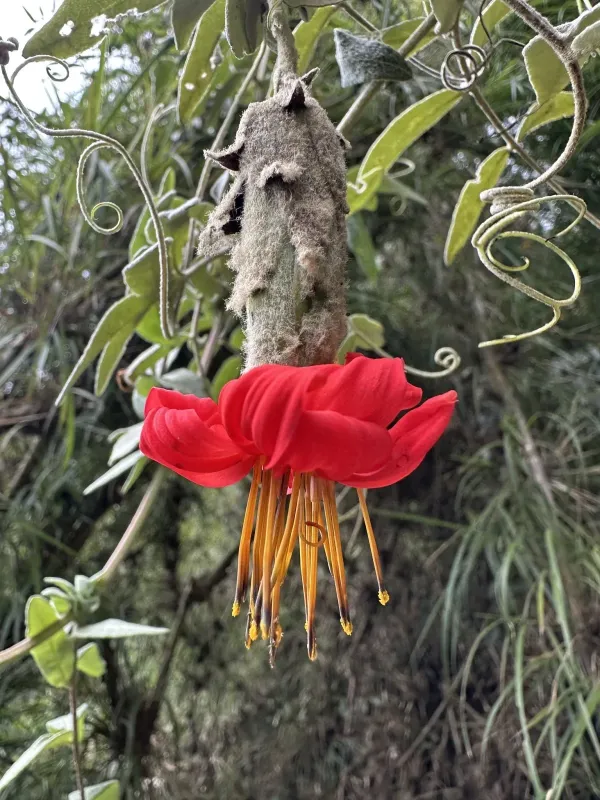
Description
Growing requirements
Mutisia clematis is a unique climbing shrub belonging to the Asteraceae family, prized for its showy, daisy-like flowers and its ability to scale structures using leaf tendrils. It is a distinctive representative of South American high-altitude flora.
Originating from the Andes mountains, this species is adapted to cool, moist environments. It is widely cultivated in botanical collections and private gardens located in regions that mimic its native montane habitat, where temperatures remain moderate throughout the year.
The crop requires well-draining, nutrient-rich soil that mimics the friable conditions of mountainous terrain. Ensuring efficient drainage is critical, as the roots are highly susceptible to rot if subjected to waterlogged conditions for extended periods.
Climate-wise, Mutisia clematis thrives in locations with partial shade and protection from harsh, drying winds. It prefers a humid atmosphere, which can be maintained through strategic planting near water features or in greenhouse conditions during extreme weather.
Agricultural management centers on providing strong, vertical support systems early in the growth cycle. Pruning is essential for maintaining the desired shape and promoting lateral growth, which improves the density of the foliage and maximizes the flowering potential.
Main diseases and pests
Pathogenic threats are primarily associated with soil-borne fungi, which thrive in stagnant, wet conditions. Proper irrigation management is the primary defense strategy, ensuring that the soil medium remains moist but never oversaturated.
Pest pressures include common greenhouse insects such as aphids and spider mites. These pests tend to colonize the undersides of the leaves, requiring regular monitoring and early intervention with organic soap-based sprays or integrated pest management techniques.