
Mount Etna broom
Genista aetnensis (Raf. ex Biv.) DC.
Description
Growing requirements
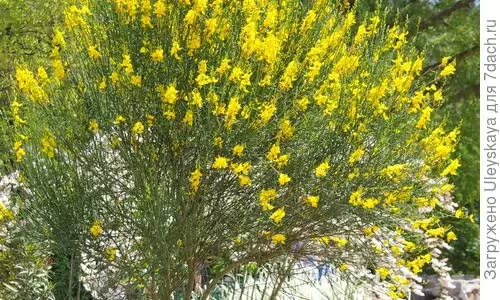
The Mount Etna broom (Genista aetnensis) is a distinctive deciduous shrub or small tree belonging to the Fabaceae family. Known for its slender, arching green branches, it can grow up to several meters in height, creating a weeping, airy silhouette.
This species is native to Sicily and Sardinia, specifically thriving on the volcanic, rocky slopes of Mount Etna. Its evolutionary adaptation to harsh, nutrient-poor soils makes it an exceptionally resilient plant for landscaping in dry climates.
Optimal growth requires full sun exposure throughout the day. It does not tolerate shade, which causes the base of the plant to become leggy and drastically reduces the profusion of its vibrant yellow, pea-like flowers during the summer months.
The ideal growing medium is a well-draining, sandy, or gravelly soil with a neutral to slightly acidic pH. The plant's deep taproot allows it to exploit moisture reserves, so it is crucial to avoid sites where water tends to pool or stagnate.
Climate adaptability is one of its strongest traits, as it thrives in Mediterranean conditions with hot, dry summers and mild winters. It is relatively cold-hardy but should be sheltered in areas experiencing prolonged or severe frost.
Main diseases and pests
Genista aetnensis is generally resistant to most common pests and diseases. The most frequent issues arise from overwatering, which can lead to root rot; therefore, ensuring excellent drainage is the primary defense strategy.
Aphids can occasionally cluster on tender new growth during the spring. If populations become high, insecticidal soaps or neem oil applications are usually sufficient to manage the infestation without damaging the plant's delicate foliage.
Powdery mildew may occur if the plant is situated in a location with poor air circulation. Pruning away congested branches to allow air movement through the center of the canopy is the best cultural control method.
Root-knot nematodes can impact the plant's vitality in contaminated soil. To prevent this, ensure that the planting site has not been recently used for other susceptible legume species and maintain soil health.
Overall, the plant is remarkably hardy. Minor damages from environmental stressors or occasional pests are typically outgrown by the shrub, especially when it is established in an environment that mimics its natural rocky habitat.