
Moricandia sinaica
Moricandia sinaica
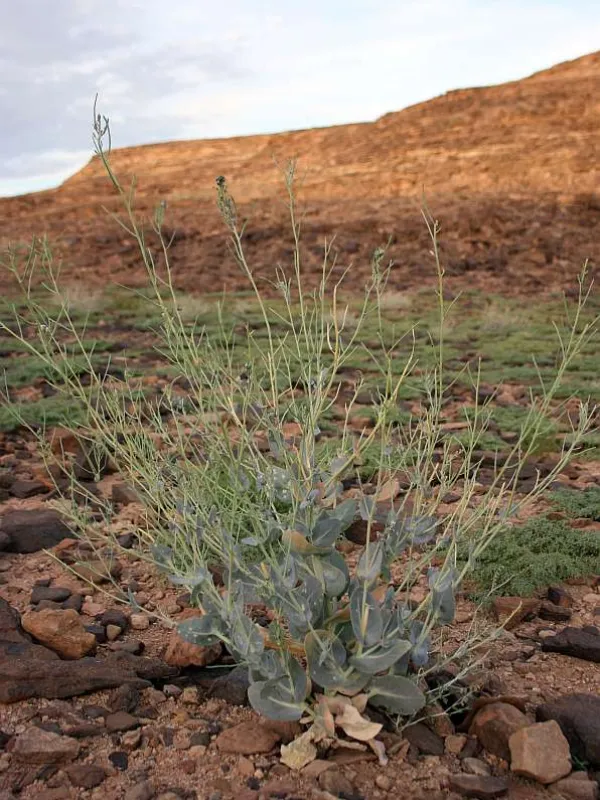
Description
Growing requirements
Moricandia sinaica is a perennial herbaceous plant belonging to the Brassicaceae (Mustard) family. Native to the harsh environments of the Middle East and North Africa, it is uniquely adapted to desert and semi-desert conditions, making it a subject of interest for arid-land agriculture.
The plant features a deep and expansive root system, which allows it to access water trapped in the lower soil horizons. It is notably tolerant to saline soil conditions, a characteristic that is highly valued in regions prone to soil degradation.
Thriving in extreme heat, Moricandia sinaica requires intense sunlight for healthy development. It performs best in well-drained, sandy, or loamy substrates where water does not accumulate, as root aeration is critical for its survival.
Its natural habitat experiences dramatic shifts between scorching daytime temperatures and cold desert nights. The plant’s metabolic pathways have evolved to accommodate these fluctuations, ensuring growth even when moisture levels are extremely low.
Agrotechnical management is minimal due to the plant's natural hardiness. When introducing it to cultivated settings, it is essential to mimic natural arid conditions, emphasizing precise, infrequent irrigation rather than constant moisture.
Harvesting
The primary agricultural use of Moricandia sinaica is as a forage crop for livestock. In its native range, it provides a vital source of green biomass for camels, sheep, and goats, particularly during the dry season when most other vegetation is dormant.
Harvesting is typically done through controlled grazing or strategic mowing during the flowering phase. This timing ensures that the forage contains the optimal balance of proteins and mineral salts necessary for animal nutrition.
Beyond livestock feed, the plant serves an ecological role in desert stabilization. Its root structure helps to fix sandy soils, preventing wind erosion and contributing to efforts to combat desertification in vulnerable regions.
Sustainable harvesting is essential, as the plant needs to recover its root nutrient reserves after biomass removal. Overgrazing can permanently destroy local stands, so rotation management is recommended for sustained agricultural output.
Current research continues to evaluate the nutritional profile of the plant to determine if it can be integrated into larger-scale sustainable farming systems in arid territories globally.