
Millettia thonningii
Millettia thonningii
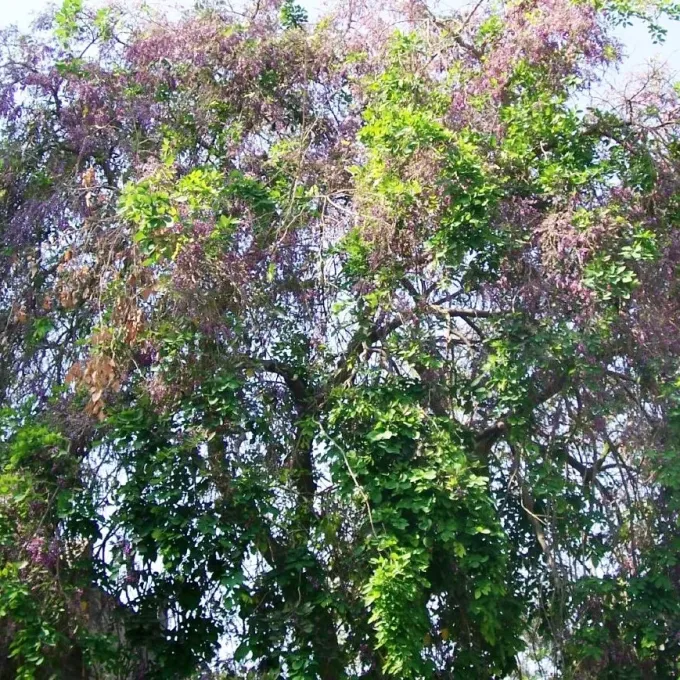
Description
Sowing dates
Millettia thonningii is a robust woody perennial belonging to the Fabaceae family, widely recognized for its ecological importance in African savanna and forest mosaics.
Propagation is primarily achieved via seeds, which exhibit a hard coat, necessitating pre-sowing treatments like mechanical scarification to ensure uniform germination rates.
Sowing in nurseries is the standard practice, where seedlings are nurtured in containers with well-drained substrate until they reach a height of approximately 30–50 cm.
The optimal time for transplanting into the field coincides with the beginning of the rainy season to allow the root system to establish before the onset of extreme heat.
Spacing should be carefully considered based on the end-use, with wider intervals required for timber production or agroforestry intercropping to ensure sufficient light penetration.
Growing requirements
This species thrives in tropical regions and is remarkably adaptable to various soil types, ranging from sandy loams to heavier clay soils, provided drainage is adequate.
Millettia thonningii requires full exposure to sunlight to reach its maximum growth potential, as it is relatively intolerant to competition in shaded understory environments.
The plant demonstrates significant drought tolerance once established, though moisture levels should be monitored during the critical first two years of development.
Temperature requirements are consistent with the tropical zones, with the plant performing best in ranges between 20°C and 32°C throughout the year.
Wind protection may be necessary for young, developing trees in open areas, as excessive wind can cause structural damage to slender trunks and branches.
Yield
Beyond its value as a timber source, Millettia thonningii is a critical nitrogen-fixing component in agroforestry systems, enriching the soil quality for neighboring crops.
The wood is highly valued for its hardness, strength, and termite resistance, making it an ideal material for rural infrastructure, tool handles, and construction.
The tree provides medicinal benefits, as various extracts derived from its bark and roots are historically used in traditional preparations for diverse ailments.
Flower production is substantial, positioning the species as an excellent nectar source for supporting pollinator populations, including bees and butterflies.
As a legume, the foliage can serve as a green manure, contributing organic matter back into the soil when leaves are allowed to decompose in the surrounding area.
Main diseases and pests
While naturally resilient, the species is susceptible to root rot if grown in poorly drained, waterlogged soil, which can be fatal to juvenile trees.
Termites can pose a localized risk, particularly to younger specimens, necessitating monitoring and the implementation of protective silvicultural practices.
Fungal leaf diseases may occasionally manifest under high humidity conditions, though these are typically managed through proper canopy thinning and ventilation.
Anthropogenic pressure, including over-harvesting of wild populations, remains a major threat to the survival of natural stands of this valuable tree species.
- Root rot caused by waterlogging.
- Termite infestations in juvenile tissues.
- Fungal foliage spots during humid seasons.