
Millettia griffoniana
Millettia griffoniana
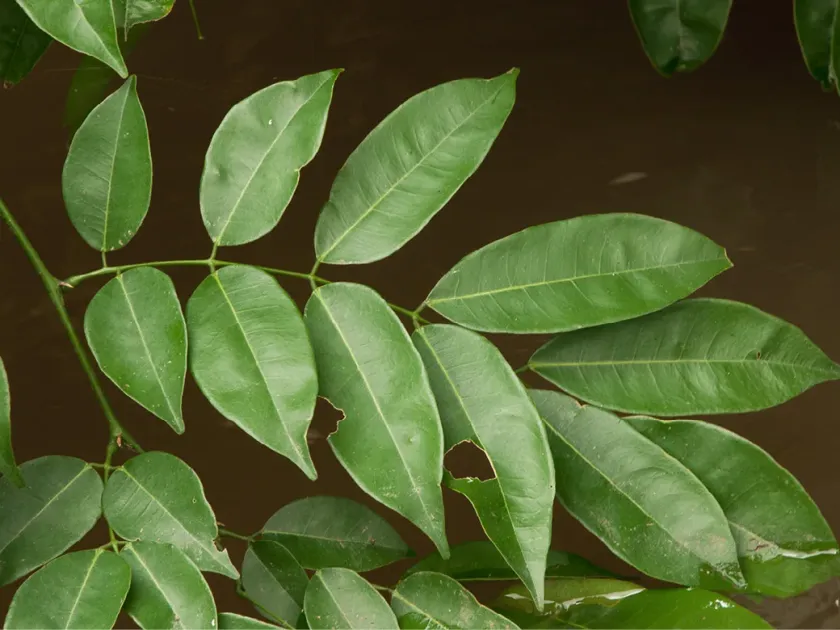
Description
Growing requirements
Millettia griffoniana is a woody perennial plant belonging to the Fabaceae family. It is native to the tropical regions of West and Central Africa, where it predominantly grows as a climbing shrub or a small to medium-sized tree in the understory of lush, moist forests.
This crop thrives in deep, fertile, and well-drained soils rich in organic matter. As a legume, it performs best in soils with a balanced pH, which facilitates the optimal functioning of nitrogen-fixing nodules on its root system, reducing the dependency on synthetic fertilizers.
Climate requirements for this species are strictly tropical. It requires consistent temperatures ranging from 22°C to 30°C and high relative humidity throughout the year. The plant does not tolerate frost or extended dry seasons, making it suitable only for equatorial or sub-equatorial climates.
Regarding light, it prefers partial shade during its juvenile phase, resembling its natural forest-floor habitat. As the plant matures, it shows adaptability to higher light intensities, provided that the soil moisture levels are maintained to support active transpiration.
Agronomic practices focus on maintaining soil structure and moisture. Regular mulching is recommended to prevent rapid soil evaporation and to promote microbial activity. Due to its climbing nature, young plants may require supportive structures or can be integrated into agroforestry systems alongside taller tree species.
Yield
The economic value of Millettia griffoniana is primarily centered on its ethnobotanical and pharmacological applications. Various parts of the plant, especially the root bark and stem, are harvested for their secondary metabolites, which possess potential medicinal properties.
In agricultural systems, it serves as a multipurpose crop. Beyond its potential medicinal harvest, it functions as a soil-enriching agent. Its ability to fix atmospheric nitrogen improves soil fertility, benefiting surrounding crops in intercropping systems.
The wood of this species is notable for its durability and resistance to decay. It is historically utilized in local rural communities for crafting high-quality agricultural tools, small-scale structural components, and various household implements that require toughness.
Yield management requires a sustainable approach. Harvesting medicinal bark must be carefully timed and conducted on mature plants to ensure the long-term survival of the crop, as aggressive harvesting can lead to the decline of the plant specimen.
Future potential lies in its use for environmental restoration. The plant's deep and branching root system is effective in stabilizing steep terrains and preventing soil erosion, making it a valuable candidate for land management projects in the tropics.
Main diseases and pests
Fungal pathogens represent the most significant threat to Millettia griffoniana, especially in high-moisture environments. Poor drainage often leads to root and collar rot, which can cause rapid wilt and death if not managed with preventative soil conditioning.
Insects, particularly wood-boring beetles, can cause significant damage to the trunk and branches of mature trees. Regular scouting is essential to identify infestations early before the structural integrity of the plant is compromised by extensive tunneling.
Epiphytic parasites are common in its natural range, often competing for nutrients and light. Overgrowth of parasitic vines on the canopy can weaken the host plant, significantly reducing its photosynthetic output and overall vitality.
The main threat to wild populations is over-exploitation by collectors targeting medicinal bark. This unsustainable practice pushes the species toward localized scarcity, highlighting the urgent need for controlled cultivation on farms rather than relying solely on wild harvesting.
Effective plant protection involves maintaining rigorous orchard hygiene. Pruning away infected branches and ensuring adequate spacing between individual plants helps improve air circulation, effectively reducing the humidity pockets where many pathogenic fungi flourish.