
Panga Panga
Millettia stuhlmannii
Description
Growing requirements
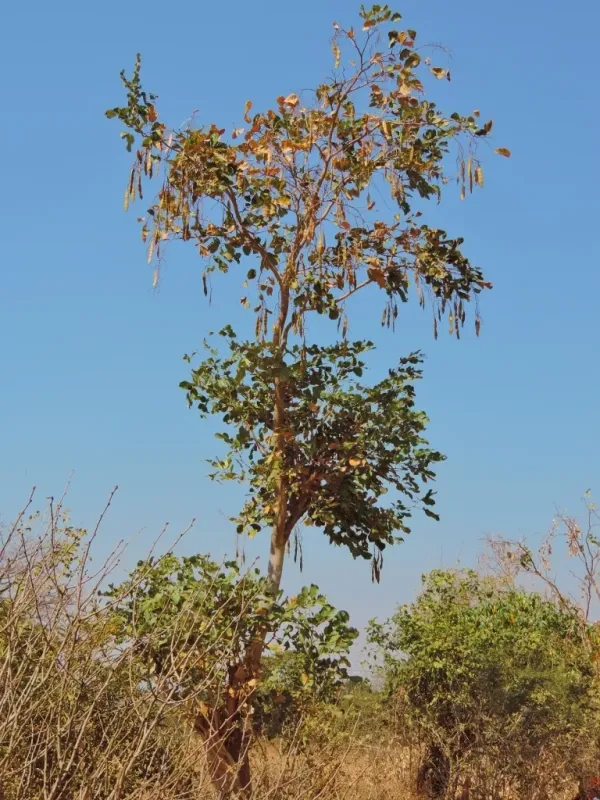
Millettia stuhlmannii, commonly known as Panga Panga, is a leguminous tree species native to East Africa. It is a large deciduous tree that belongs to the Fabaceae family, recognized for its dense and highly valuable heartwood.
The tree naturally thrives in tropical lowland forests where moisture is consistent throughout the year. It prefers deep, nutrient-rich soils that offer good drainage, which is essential to prevent root rot in its early stages of development.
As a nitrogen-fixing species, Millettia stuhlmannii plays a vital role in soil fertility within its ecosystem. It establishes a symbiotic relationship with bacteria in its roots, allowing it to thrive in varied environmental conditions.
Climatically, it requires a warm environment with high humidity. While it is tolerant of some short-term dry spells once established, sustained growth depends on the availability of groundwater and consistent seasonal rains.
The species grows at a slow pace, often requiring decades to reach timber-harvesting maturity. This biological trait necessitates careful planning in forestry management to ensure sustainable yield and prevent over-exploitation.
Harvesting
Harvesting of Millettia stuhlmannii is primarily directed at its high-quality timber. The wood is exceptionally hard and durable, often compared to Wenge (Millettia laurentii), and is highly sought after for high-end furniture and flooring.
During the harvest phase, moisture control is critical. The wood must be dried slowly and properly to avoid warping or checking, as its high density makes it prone to internal stresses during rapid climate changes.
The wood has a distinct grain pattern, which makes it aesthetically pleasing for cabinetry and musical instruments. It is also resistant to termite attacks, adding to its value in construction projects located in tropical zones.
Besides timber, the plant has significance in local ethnobotanical traditions. Various components of the tree are harvested for traditional medicine, reflecting its deep integration into the local culture of its native range.
Current forestry strategies focus on sustainable extraction methods. By practicing selective logging and implementing enrichment planting, foresters aim to balance the demand for this rare hardwood with the need for ecological conservation.