
Millettia leucantha
Millettia leucantha
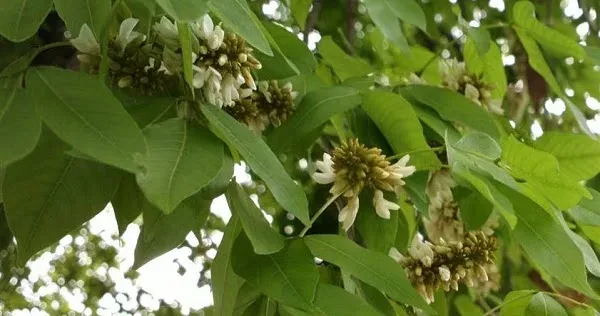
Description
Sowing dates
Millettia leucantha is a legume species primarily propagated through seeds or cuttings within controlled nursery environments. Sowing should be conducted when the soil temperature is consistently warm, ensuring rapid germination and the establishment of a robust root system in young seedlings.
Seeds require scarification to penetrate the tough outer coat, which significantly improves germination rates. Once treated, seeds should be placed in a well-draining, neutral-to-slightly-acidic substrate to prevent fungal issues and ensure healthy early development of the taproot.
In its native range across Southeast Asia, the germination process is synchronized with the onset of the monsoon season. In modern commercial nurseries, this cycle is replicated through irrigation management, allowing for high-quality seedling production throughout the year.
Transplanting to permanent sites is best performed once seedlings reach a height of 30–50 cm. Minimizing disturbance to the root ball during this process is crucial for reducing transplant shock and ensuring that the young trees adapt efficiently to their new environment.
Planting density varies based on the intended land use. For forestry applications, a spacing of 3 to 5 meters between individuals is recommended to provide sufficient space for canopy development, while higher densities may be used for specific green-manure or aesthetic purposes.
Growing requirements
This species is highly heat-dependent and thrives in tropical and subtropical climates. The optimal temperature range for consistent growth is 22–30°C; the plant is highly sensitive to frost and extreme cold, which can cause severe dieback or total mortality in young specimens.
Millettia leucantha prefers deep, well-draining loam soils but is capable of growing in nutrient-poor conditions due to its ability to fix nitrogen in the soil via symbiotic bacteria. This quality makes it an excellent choice for land restoration and soil enrichment programs.
Sunlight is a critical factor for successful cultivation. While young plants can tolerate partial shade, mature trees are heliotropic and require full, direct sunlight to produce their characteristic profusion of white flowers and achieve structural maturity.
Water requirements fluctuate with the plant's life stage. After successful establishment, the species demonstrates moderate drought tolerance, though supplemental irrigation during the peak growing season significantly enhances biomass production and overall tree vigor.
Waterlogged or saline soils should be avoided, as these conditions inhibit root respiration and foster pathogenic infestations. Choosing elevated or well-sloped sites with excellent natural drainage is the most effective way to ensure long-term health and productivity.
Yield
The primary economic value of Millettia leucantha lies in its high-quality timber, which is prized for its density, durability, and resistance to environmental degradation. In forestry, the yield is calculated based on the accumulation of valuable wood biomass over a 15–25 year rotation.
Beyond timber, the species is highly valued for its aesthetic yield in landscape architecture. Its ability to produce dense, white floral displays makes it a sought-after ornamental for public parks, avenues, and large botanical gardens in tropical zones.
Seed production is an important secondary yield for commercial nurseries. Mature trees provide substantial quantities of pods annually, which are harvested to supply the demand for reforestation projects and species conservation programs.
The plant also offers an indirect yield through soil improvement. The leaf litter from this legume is rich in nutrients and decomposes rapidly, providing a significant boost to the fertility of the surrounding soil, which benefits adjacent crops in integrated agroforestry systems.
Sustainability in production is monitored by assessing the annual increase in girth and height. Proper thinning and canopy management during the growth cycle ensure that the final timber yield is free from defects and meets the high standards of the lumber industry.
Main diseases and pests
The species generally maintains a strong natural immunity; however, in dense monoculture plantations, it can be susceptible to root-rot fungi triggered by waterlogging. Prevention through proper drainage management is far more effective than chemical treatments.
Wood-boring insects and beetle larvae are potential pests that may target the stems of younger trees. Regular inspection of the bark and trunk allows for early intervention, preventing localized damage from spreading throughout the plantation.
Defoliating insects can occasionally cause issues during the peak spring growth phase. While the tree's resilience often allows it to recover, large-scale outbreaks require integrated pest management (IPM) to maintain the desired rate of biomass accumulation.
Disease control is best managed through strict phytosanitary practices, including the sterilization of pruning tools to prevent the transmission of pathogens between individual trees. Keeping the plantation environment clean is vital for overall tree health.
In cases of infestation, biological control agents or targeted, eco-friendly insecticides are preferred. By maintaining an optimal microclimate and ensuring the soil is not overly saturated, the risk of disease is significantly lowered for the entire stand.
Harvesting
Timber harvesting occurs when the trees reach maturity, typically after two or three decades, depending on the site conditions. This timing ensures the wood has reached the necessary density and coloration required for high-end furniture and construction.
Seed harvesting is conducted when the pods turn dark brown, indicating full physiological maturity. It is crucial to collect these before the pods burst naturally to ensure that the yield is captured in its entirety for nursery processing.
Post-harvest, seeds are processed by removing the hulls and drying them in well-ventilated areas. Controlled humidity storage is required to maintain viability, as the seeds are sensitive to moisture fluctuations that could compromise their germination potential.
When harvesting biomass for use as green manure, the material is shredded and integrated into the soil surface. This practice recycles nutrients effectively, reducing the need for synthetic fertilizer inputs and improving the long-term structure of the soil.
Careful felling and post-harvest site maintenance are essential. Treating stumps or managing regrowth contributes to the sustained health of the land, ensuring that the site remains suitable for future replanting cycles without degrading the underlying soil ecology.