
Wenge
Millettia laurentii
Description
Growing requirements
Wenge (Millettia laurentii) is a tropical tree species belonging to the Fabaceae family. It is native to the tropical rainforests of Central Africa, specifically inhabiting regions across the Congo Basin. The tree requires a warm, humid climate with minimal seasonal fluctuations to thrive, as it cannot survive in temperate or frost-prone regions.
Regarding soil requirements, Wenge prefers nutrient-rich, deep soils that maintain consistent moisture levels. While it is adapted to the tropical environment, it is sensitive to soil compaction and poor drainage, which can inhibit the development of its expansive root system. It thrives best in protected, high-canopy forest environments during its juvenile years.
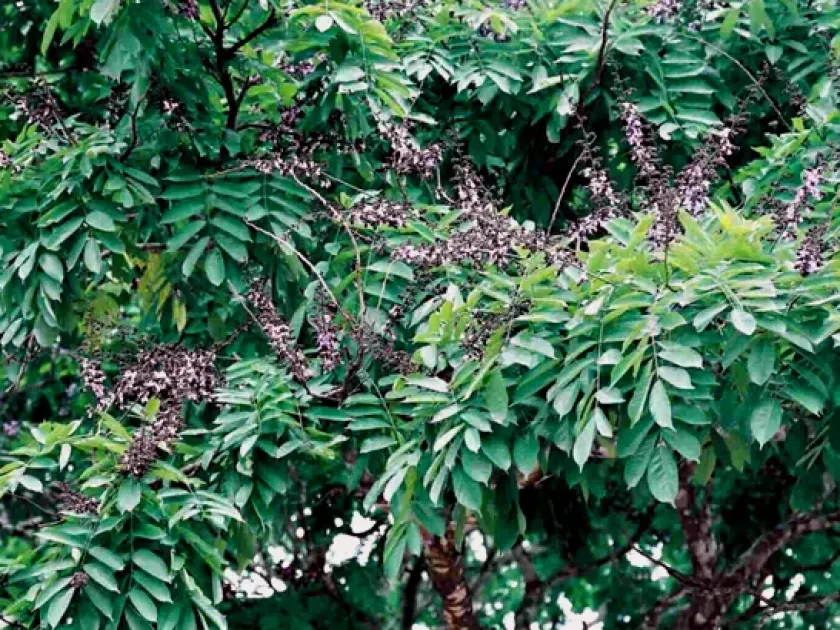
Botanically, Millettia laurentii is recognized as a slow-growing hardwood. It can reach heights of up to 20 meters, with a trunk diameter that may exceed one meter in mature specimens. Its foliage is pinnate, typical of many legumes, and it produces woody, pod-like fruits that contain seeds necessary for natural propagation.
Agronomic management of Wenge is challenging due to its extremely slow growth rate and sensitivity to environmental changes. Forestry practices focus on selective harvesting rather than intensive plantation systems, as the biological cycle for reaching a harvestable diameter can span several decades. Protecting young saplings from faster-growing invasive weeds is critical for their survival.
Wenge wood is highly valued in the global market for its aesthetic dark brown color and exceptional hardness. Key industrial uses include the manufacturing of high-end furniture, musical instruments, luxury parquet flooring, and interior joinery. Its density and rot resistance make it a premium material for interior design applications.
Main diseases and pests
The primary threats to Millettia laurentii include susceptibility to wood-boring insects and specific fungal pathogens that target the tree’s heartwood. Moreover, the species is currently threatened by over-exploitation and deforestation, leading to a decline in natural populations. Sustainable management is essential to prevent the extinction of this commercially important timber tree.